TIA, TRIB Seek Larger Legislative Package for Retread Bills
Top Takeaways for Tire Dealers and Retreaders
- The bills remain at the introduced stage. H.R. 3401 has 10 House supporters, while S. 2790 has three Senate supporters. TIA and TRIB are working to add cosponsors, particularly in the Senate.
- Advocates are looking for a larger legislative vehicle. TIA is exploring year-end tax legislation, the National Defense Authorization Act, surface transportation reauthorization and other broader packages as possible paths forward.
- The proposal combines a tax incentive with federal purchasing requirements. Eligible taxpayers could receive a credit worth up to $30 per qualifying retreaded tire, while federal agencies would be required to purchase a matching retread from the GSA schedule when one is available.
- Dealers and retreaders can help build support. TRIB’s advocacy resource helps industry members identify their lawmakers and provides suggested language for requesting support for S. 2790 and H.R. 3401.
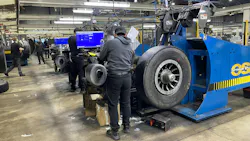
Both federal bills designed to encourage the purchase and use of retreaded tires remain at the “introduced” stage, but tire industry advocates say they are pursuing several larger legislative packages as potential paths to passage.
The Tire Industry Association (TIA) and Tire Retread & Repair Information Bureau (TRIB) are also working to increase support for the companion measures, particularly in the Senate, following a July 16 visit to Capitol Hill.
“This is obviously not stand-alone legislation that would be presented and passed,” David Stevens, managing director of TRIB, told MTD. “It needs to be attached to something else.”
Roy Littlefield IV, vice president of government affairs for TIA, says the association is evaluating several possible vehicles, including the fiscal year 2027 budget reconciliation framework, an end-of-year omnibus tax package, the National Defense Authorization Act and the next surface transportation reauthorization bill.
Bills await committee action
H.R. 3401, the Retreaded Tire Jobs, Supply Chain Security and Sustainability Act of 2025, was introduced in May 2025 and referred to the House Ways and Means Committee and House Oversight and Government Reform Committee.
S. 2790, titled the Resilient Tire Supply and Jobs Act, was introduced in September 2025 and referred to the Senate Finance Committee. Neither bill has received additional recorded committee action.
Littlefield says the House measure has 10 supporters, consisting of lead sponsor Rep. Darin LaHood, R-Ill., and nine cosponsors. Seven of the House supporters are Republicans and three are Democrats.
The Senate measure has three Republican supporters: lead sponsor Sen. Jon Husted, R-Ohio, and cosponsors Sens. Roger Marshall, R-Kan., and Josh Hawley, R-Mo.
“Efforts to secure additional congressional co-sponsors are underway, with announcements expected once commitments are finalized,” says Littlefield.
TIA and TRIB focus on Senate

The Senate’s smaller number of supporters shaped TIA and TRIB’s strategy during their most recent visit to Washington, D.C.
The organizations met with the offices of Sens. Gary Peters, D-Mich.; Mark Warner, D-Va.; Jon Ossoff, D-Ga.; James Lankford, R-Okla.; Tammy Duckworth, D-Ill.; Thom Tillis, R-N.C., and Ted Budd, R-N.C.
TIA and TRIB selected offices by weighing senators’ committee assignments, the potential influence they could have on the legislation and whether major retreaders had operations and employees in their states, according to Stevens.
The delegation included representatives from Love’s Travel Stops, Pomp’s Tire Service Inc. and McCarthy Tire Service Co. Inc. — eighth, third and seventh, respectively, on MTD’s 2026 Top 50 U.S. Retreaders list. Those participants were able to tell congressional staff how many retread facilities, stores and jobs their companies supported in their individual states.
“It’s really about making that link between this is beneficial from an economic standpoint for fleets and owner-operators and governments, but it’s also down to (the) U.S. jobs and U.S. manufacturing in states that these senators represent,” says Stevens.
Another goal was to broaden the bill’s Senate support beyond Republicans. Stevens says TIA and TRIB wanted the Senate campaign to reflect the bipartisan support the proposal has attracted in the House.
As of Stevens’ July 31 interview with MTD, the meetings had not produced a new Senate cosponsor. However, he says the organizations had exchanged follow-up emails with congressional offices and responded to requests for more information.
Littlefield declined to identify any office that may be preparing to support the legislation, saying TIA will allow lawmakers and their staffs to announce their own positions and timelines.
Supply chain message draws attention
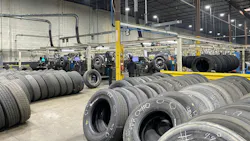
The delegation discussed the bills’ potential effects on manufacturing jobs, fleet costs, sustainability and the domestic tire supply chain. Of those arguments, Stevens says supply chain security appeared to attract the most attention from congressional staff.
“It really had to do with that supply chain security issue,” he says, noting that the topic prompted staffers to look up from their notepads or begin taking notes.
Stevens says the disruptions experienced during the COVID-19 pandemic demonstrated the domestic retread industry’s importance. If ports close or imported tires become unavailable, he says U.S. retreaders provide an essential domestic source of commercial tires.
Protecting U.S. manufacturing jobs from low-cost imported tires was a close second among the arguments that resonated with congressional offices, he says. Sustainability benefits also attracted interest, particularly during meetings with Democratic offices.
Materials supplied to lawmakers by TIA and TRIB cite a 2018 analysis that estimated the retread sector directly employed more than 51,000 workers and supported more than 268,000 jobs throughout the broader tire industry.
The materials also say approximately 15 million commercial tires are retreaded annually in the U.S., while the estimated number of domestic retread plants fell from more than 3,000 in 1982 to around 500 in 2023.
TIA and TRIB also told lawmakers that retreading saves fleets nearly $3 billion annually and that producing a retread requires approximately 15 fewer gallons of oil and 90 to 100 fewer pounds of material than producing a new commercial truck tire.
How the legislation supports retreading
The bills would create a general business tax credit for qualifying retreaded tires that are both purchased and retreaded in the U.S.
The credit would equal the lesser of 30% of the tire’s purchase price or $30 per tire. As introduced, the credit would apply to qualifying tires placed in service after Dec. 31, 2025, and would end for tires placed in service after Dec. 31, 2028.
Littlefield says that means purchases made during 2026 could qualify retroactively if the bill were enacted with its current effective date.
However, TIA expects the dates and other provisions could be updated as the legislation advances.
“We are closely monitoring the bill’s progress and would certainly look to propose updates and amendments as it moves forward, ensuring the final language incorporates appropriate effective dates and modernized guidelines,” he says.
The proposed tax credit applies to taxpayers and does not establish a separate way for tax-exempt state, local or federal fleets to claim it, according to Littlefield.
The legislation separately contains a federal procurement requirement. When a retread is available through the General Services Administration tire schedule in the desired size, load range and tread designation, a federal agency would be required to order it instead of a new tire that cannot be retreaded.
Federal agencies would retain discretion when no matching retread is available on the GSA schedule. The bill does not establish a similar procurement mandate for state or local government fleets.
How to support the legislation
Although passage remains TIA’s goal, Littlefield says the association also recognizes that the proposal could require a longer campaign.
“We are actively leveraging this session to expand our coalition, educate key lawmakers and build durable momentum that will guarantee a strong foundation for future legislative success,” he says.
Stevens says dealers, retreaders and fleet customers can contribute by contacting their senators and House representatives and asking them to support the applicable bill.
Industry members should explain how retreading affects employment, manufacturing, fleet customers and business activity within the lawmaker’s state or congressional district.
“Grassroots efforts make a difference,” says Stevens. Congressional offices track constituent calls and emails, he adds, and repeated contact can elevate an issue among the many proposals competing for lawmakers’ attention.
Dealers and retreaders who want to support the bills can visit TRIB’s online advocacy resource, which explains the legislation, helps dealers and retreaders find their representatives and gives them suggested language for calling or emailing in support of S. 2790 and H.R. 3401.
While TIA has not identified a firm commitment resulting from the July meetings, Littlefield says conversations remain “constructive, collaborative and heading in a positive direction.”
About the Author
 Sara Welch
Sara Welch
Managing Editor
Sara Welch is Modern Tire Dealer's managing editor. She is an award-winning journalist who covered agriculture in Ohio, Pennsylvania and West Virginia for 10 years and sports for five years before coming to MTD. She can be reached at [email protected].