Radial OTR Tires on the Farm
Key Highlights
- Maintaining an in-stock inventory of OTR tires ensures quick replacements and reduces operational downtime.
- Radial OTR tires are preferred for their durability and smooth ride on hard surfaces, while bias-ply tires can be more cost-effective and better suited for applications with a higher risk of sidewall cuts or punctures.
- Loaders equipped with appropriate OTR tires are vital for tasks such as loading fertilizer, feed and manure in various agricultural settings.
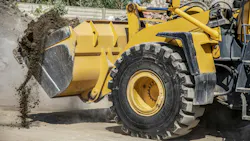
Are there certain radial OTR tires that are commonly used in farming applications?
The answer is yes, says Dave Paulk, manager, field technical services, BKT USA Inc.
"Some sizes of bias and radial OTR tires are used in farming applications, especially on loaders. The most popular sizes are 17.5-25, 20.5-25 and 23.5-25, with 26.5-25 and 29.5-25 used on larger loaders. Loaders are used at co-ops for loading fertilizer spreaders. At dairies, they load feed mixers with silage and grain and move silage for storage. Additionally, loaders are used in cattle feed yards to load manure into spreaders for disposal."
Both radial and bias-ply ag tires play their roles in different farming applications, he notes.
"Radial tires tend to be more costly but offer improved performance and durability on hard surfaces like concrete at dairies and feed yards. They typically provide a smoother ride and better handling on such surfaces. Conversely, if there's a risk of sidewall cuts or punctures, bias tires may be more suitable, as their sidewalls are straighter and lack the radial bulge. Bias tires usually cost less but don’t last as long as radials when used on hard surfaces."
Paulk recommends that tire dealers have OTR tires for ag applications in-stock. "Maintaining OTR tires in stock for agricultural use provides a backup option in case of tire failure and offers customers a quick, convenient way to obtain a replacement."