Radial Versus Bias When Reducing Compaction
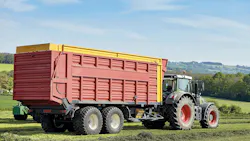
What type of tire - radial or bias - is more effective in helping reduce soil compaction and why?
"Agricultural tires are produced in bias ply and radial designs," says Dave Paulk, maanger, field technical services, BKT USA Inc. "Both types serve specific purposes, but radials are more effective at minimizing soil compaction.
"Radials are designed to operate at lower air pressures compared to bias tires. The air pressure in a tire determines the ground bearing pressure. Higher pressure equals more soil compaction, while lower pressure reduces it. Excessive soil compaction hampers plant growth, impairs water and fertilizer absorption and decreases crop yields.
"When used with proper air pressures, radial tires have a larger and longer footprint, distributing the tractor's or implement's weight more evenly. This improves traction, reduces soil compaction and consumes less fuel. Although the correct load-bearing air pressure is essential, it is usually lower for radials than for bias tires. Running bias tires at low air pressures can lead to tire failure.
Paulk adds that BKT "offers a broad range of radial tires designed to reduce soil compaction. The AGRIMAX RT855 is a versatile standard tire available in many sizes and load indexes commonly used in the U.S. The AGRIMAX FORCE features IF (increased flexion) technology, allowing it to carry 20% more weight at the same air pressure compared to standard tires of the same size.
"The AGRIMAX V-FLECTO incorporates VF (very-increased flexion) technology, enabling it to carry 40% more weight under identical conditions. Since tire pressure affects soil compaction, pressures for IF and VF tires can be lowered while maintaining the same load as a standard tire, making VF tires potentially more cost-effective with reductions of up to 40% in air pressure. Regardless of the tire type, the correct air pressure for the load must be used to ensure optimal performance."