Strandberg: Service Expansion Doesn't Just Improve Margins
For decades, tire dealers have operated in a familiar reality. Tires drive traffic. At best, service supports profitability. At worst, it’s a necessary evil. That formula still holds true today. But the way the best operators are thinking about their businesses has evolved.
My team and I closed a deal late last year. In addition to a killer management team and a great story about the dealership, a unique differentiator jumped out: tires were somewhat of an afterthought. That led to an expanded buyer universe and an outsized valuation.
I’m seeing a growing number of tire dealerships intentionally expand into more labor-intensive, higher-margin services. On the surface, the motivation is straightforward. But beneath that operational logic sits a much more powerful outcome. Adding services doesn’t just make your business healthier today. It fundamentally changes how buyers view your business tomorrow.
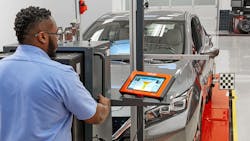
Service expansion changes the narrative. When a shop focuses on mechanical, alignment, diagnostics, ADAS calibration, fleet services and other labor-driven offerings, it begins to look less like a commodity retailer and more like a strategic automotive services platform. That distinction matters.
In M&A, buyers don’t just underwrite revenue. They underwrite durability. They look for businesses with diversified income streams, recurring customer relationships and the ability to grow without relying solely on price or volume. Services check all of those boxes.
Labor-intensive services also tend to carry higher gross margins than tire sales alone. More importantly, those margins are often more defensible. While tire pricing has become increasingly transparent, service pricing is influenced by trust, convenience, expertise and speed — factors that are harder to commoditize.
From a buyer’s perspective, strong service revenue improves EBITDA quality. It reduces volatility. It increases predictability. And it signals that your business has multiple levers to pull in both good times and challenging ones. That’s not just good operating strategy. It's a good valuation strategy.
One of the most overlooked benefits of service expansion is how dramatically it broadens the universe of potential buyers. A tire-only business may be highly attractive to other tire dealers. A service-centric automotive repair platform, however, attracts existing tire dealer platforms and a whole lot more.
This isn’t about chasing a sale. It’s about creating options. The more complete and resilient your business model is, the more interest it generates and the more leverage you have when opportunities arise.
One of the most common misconceptions I hear is that tire dealers should only think about valuation when they’re ready to sell. In reality, the highest-value transactions happen when owners aren’t forced into a decision.
Service expansion gives owners optionality. It allows them to grow profitably on their own terms. It creates the ability to raise capital, pursue acquisitions or bring in a partner — without giving up control. And if and when a sale becomes attractive, it positions the business to command attention from a wider range of buyers.
Expanding services doesn’t mean you need to implement everything at once. Some of the most compelling businesses I work with have a clear road map. Services are already in place, services are being piloted and additional services planned for the future.
That future vision matters. Buyers don’t need every opportunity to be fully executed. In fact, leaving some meat on the bone can be a good thing. What buyers need is confidence that your leadership team understands where the industry is going and has positioned the business accordingly. That’s where visionary thinking comes into play.
Tire dealers who consistently build the most valuable businesses tend to ask themselves a different set of questions. They step out of the day-to-day and think in future tense. They study trends outside their immediate niche. They surround themselves with forward-thinking peers. And they balance execution with aspiration - building a strong business today while planting seeds for tomorrow.
A useful question I often suggest is this: "If you had unlimited runway and unlimited capital, what would you build?" You may not execute on every idea, but that mindset helps clarify where to invest, where to experiment and where to leave upside for the future.
The tire and automotive service industry remains as strong and resilient as ever. Demand isn’t going away. Vehicles aren’t getting simpler. And customers increasingly value convenience, expertise and trust.
The tire dealerships that will command premium valuations in the years ahead won’t just be well-run. They’ll be well-positioned. They’ll tell a compelling story about where they’ve been and where they’re going. More often than not, that story will include a thoughtful expansion into services that enhance margins, diversify revenue and expand buyer interest.
You don’t need to be thinking about selling to start thinking about offering an expanded menu of services. The work you do today matters more than you may realize.
About the Author
 Cole Strandberg
Cole Strandberg
Cole Strandberg is managing director and co-head of Automotive Services at National Business Brokers, specializing in mergers and acquisitions and capital raising for multi-location tire dealerships and automotive service businesses. He can be reached at [email protected].