Minnesota Tire Dealer Uses Political Experience to Confront Rising Taxes
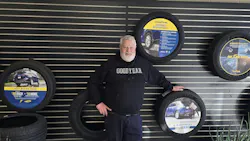
Dan Dorman’s politics have always been driven by his experiences as the owner of Hanson Tire Service and his compassion for his community in Albert Lea, Minn.
Now, nearly 20 years removed from his service as a member of the Minnesota House of Representatives, Dorman’s authenticity, resolve and perspective as an independent tire dealer may be more valuable to American politics than ever before. (MTD first featured Dorman in 2005, when he served as a state representative. You can read that story here.)
“I'm not saying that I don't understand how the game is played, but the idea that somebody in St. Paul (the capital of Minnesota) or somebody here in Albert Lea — or frankly, somebody in Washington — is really going to have an impact next year (is) not very likely,” says Dorman.
“What we can influence and what we should be focused on is what we can change to make sure things are better in year 10, year 15, year 20. I don't think we talk about and think about those things as much as we should. That part seems to be getting worse. It seems to be more ‘We all — our community — we need to fix this and fix it yesterday.’ Sometimes that's not possible. That's the hard thing to tell people, but sometimes that's not possible. But let's figure it out together and let's fix it.”
Grounded in reality
Dorman’s love of his hometown, Albert Lea, shaped both his professional and political careers.
Hanson Tire Service was Dorman’s “way to come back home” with his wife after college in 1988 to raise a family. He joined his father, who co-owned the shop at the time, and became an owner six years later when he bought out his father’s partner.
“We never changed the name since it had a pretty good reputation,” says Dorman. “And frankly, I didn't care if people called me Mr. Hanson or Mr. Dorman. As long as they were buying tires, (it) didn't matter to me.”
Dorman says that just as it was a wonderful place to grow up, Albert Lea provided a wonderful place to raise a family. His granddaughters mark the sixth generation of his family to call Albert Lea home.
Ensuring his hometown stays a great place for families ultimately pushed Dorman to pursue politics. He first got involved by supporting a referendum for a new high school. He recalls friends and colleagues being concerned about his business at Hanson Tire Service because he publicly took a position. But his response was simple and resolute. “I said, ‘I'm going to and if people don't want to come buy tires from me because I think we need a new school, I can live with that,’” says Dorman.
Looking back, he figures he probably lost some customers, but he also picked some up. He never saw a big change in sales due to his political involvement, which spanned over 20 years, and his tire shop helped him stay connected to his community.
“I think it helped keep me grounded, to be honest with you. It's pretty close to getting the pulse of the community. You know, people are getting their car serviced and they’re given an opportunity to talk about what's on their mind. So I always thought it was a pretty good opportunity for me to stay connected with, at that time, constituents and customers.”
Dorman won a seat in the Minnesota House of Representatives in 1998 as a registered Republican, but considered himself a political independent and valued working with Republicans and Democrats alike on policies related to agriculture, commerce, job growth, local infrastructure and economic development.
He was reelected in 2000, 2002 and 2004, and his independent approach led to his appointment as chair of Minnesota’s Capital Investment Committee during his final term. He also served as vice-chairman of the state’s Jobs and Economic Development Finance Committee and was co-author of the JOBZ legislation, which was passed by the Minnesota Legislature in 2003.
Dorman was recognized five times by the Coalition of Greater Minnesota Cities for his service to Greater Minnesota, including receiving its Legacy Award when he chose not to run for re-election in 2006. He chose not to run again because he was becoming increasingly frustrated by party politics over doing “the right thing.
“My shtick is I say I didn't run in 2006 due to illness and then I would add I was sick of the place. But the reality was you could feel that Washington-style politics was coming home to Minnesota and so the idea of getting along with people on the other side to get something done was becoming (impossible).”
Even after his tenure in the Minnesota House, Dorman continued to advocate for his community. He served as the executive director of the Albert Lea Economic Development Agency from 2007 to 2013. In 2013, he became executive director of the Greater Minnesota Partnership, where he led advocacy efforts for greater Minnesota’s economic development until 2021. He also served as a board member of the Riverland Community College Foundation and Alberta Lea Community Foundation.
Even today, as the humble owner of Hanson Tire Service, Dorman’s concerns extend far beyond his service counter. “I'm worried about my community because if taxes get too high and it drives people out or keeps business out, that's going to have a dramatic impact on our business,” he says.
“I worry about the full economy. We're in a farm area. (If) farmers have a good year, we have a great year. Farmers have a bad year? It impacts us. And so you have to worry about a lot of stuff other than just me, because to worry about me means you have to worry about all those other items.”
Plagued by taxes
More recently, property taxes have been a central concern for Dorman as his hometown, county and school district have all approved significant tax levy increases for 2026. Albert Lea City Council approved a 5.3% increase this past December, reducing it from the original 8% increase proposed for 2026, but stacking it on top of a 14% increase in 2025. The Freeborn County Board of Commissioners approved a 9.5% increase in December, which was down from a 15% preliminary levy approved in September — the highest in the state at the time, according to Minnesota Department of Revenue data. The Albert Lea School Board approved a 6.78% increase in December.
“It's a cumulative effect, right?” says Dorman. “I mean, if you keep piling them on, eventually it's too much.”
Dorman didn’t think about property taxes as an operating expense 10 years ago, but Albert Lea has seen two dramatic increases in a row. Last year’s increase wasn’t as surprising to Dorman because he felt Hanson Tire Service was probably undervalued, noting the county hadn’t been out to look at the buildings in close to a decade, to his knowledge. However, the recent jump will be significant for his business and his customers.
“I also worry about disposable income for our customers. Are they going to be able to afford that new set of tires?”
For Hanson Tire Service, business has been a little soft for the last two years. Pre-COVID-19 and post-COVID-19 sales were strong and profits kept rising, but the last couple of years have been pretty flat.
“I think that property taxes are a part of that — not just in what we pay, but also what our customers pay,” says Dorman.
He is also concerned that the trend of rising property taxes will continue over the next three to five years, driven by federal funding cuts. He doesn’t think communities like his have felt the impacts of those cuts yet.
“If it doesn't reverse or stabilize, I think it's going to be a bigger impact on smaller communities like ours,” says Dorman.
Property taxes also tend to have a bigger impact on tire dealers and other automotive businesses due to the facilities, equipment and land they require to operate, he says. “There are a lot of things that drive our costs up more than other businesses. There's no question about it.”
Dorman also warns that continued property tax increases will disproportionately affect single-store, independent tire dealers, compared to national and multinational chains, because the added expense is a much larger portion of total sales. He expects to see a direct impact on Hanson Tire’s bottom line this year and next, but he’s thinking long-term, just like he did in the Minnesota statehouse.
“I can't worry as much about next year as, ‘How do I adjust, so that the next 10 years don't look like next year?’” says Dorman.
In the short term, Dorman will hang onto company vehicles and equipment longer than he normally would to offset costs. Long term, he’ll advocate for politics that can effect real change to improve circumstances for his business and community. He recommends those facing similar challenges get involved in their communities, too.
Advocating for change
Dorman has already shared his suggestions with the Freeborn County Board of Commissioners for next year “because that’s what they can impact.”
The budget process in Minnesota starts in the summer, so opening a dialogue with elected officials beforehand is critical. When preliminary budgets are released in the fall, it’s too late.
“The earlier you start, the more of an impact you can have,” says Dorman. “And frankly, the earlier that elected officials start to think about (your perspective), the greater impact they can have on next year's budget.”
It’s important to be proactive early and even better, to reach out with ideas, he explains.
Approaching Freeborn County’s budget the same way he would Hanson Tire’s, Dorman suggested the county weigh its budget against surrounding counties to ensure its allocating expenses “competitively.” He suggested comparing pay for department heads against those with the same title in neighboring counties and comparing the per-citizen cost of health and human services expenses to those in “the county next door.
“Are you competitive? We (tire dealers) think about that. Are we competitive with the people we sell tires against? (In) our county, I don't ever hear a lot of discussion of, ‘Hey, are we competitive compared to our county next to us?’ That probably should occur.”
Dorman doesn’t think the tax debate in his community and on a broader scale comes down to simply raising or lowering taxes. Like most issues, it’s about striking a balance and meeting somewhere in the middle to ensure the tax level pays for all the infrastructure that a healthy community needs and it’s affordable for taxpayers.
“It always sounds good to say, ‘We'll just raise taxes,’ but (it) makes about as much sense as me saying, ‘Well, jeepers, I guess we need a lot more revenue. Why don't we just add another 10% onto the price of tires?’ I wouldn't sell any, right? I have to compete. States and cities are no different.”
The tax base in Albert Lea has been stagnant for several years as jobs have moved out of the community and its taxes have outpaced those of its neighbors. If the tax level gets too high, it will have a compounding effect and make it even harder for the tax base to grow.
“It's the environment to do business that impacts everybody,” notes Dorman.
Talking to elected officials is a good starting point to initiate change and help them make informed decisions for the businesses and communities they serve, says Dorman, who emphasizes the importance of being respectful in the process.
“It's just become fashionable to beat up on elected officials or to make it personal. It's true that it drives good people out.”
He recommends that fellow tire dealers “become active in your community in significant ways, but respectfully. Show up at that county meeting. Show up at that city council meeting. But don't do it just the day they're going to pass the final levy. Show up earlier. Talk to your city councilors. Talk to your board of commissioners at the county level. Talk to your school board members. Let them know the difficulties you're facing, because if you don't, they won't understand it."
When advocating isn’t enough and requests and dialogue have been disregarded, maybe it’s time for those who understand the strains of their businesses and communities — like independent tire dealers do — to step up, he suggests.
“I'd encourage small business owners to get involved locally, run for office or if you don't think you can — you don't think you have time — go help somebody who kind of understands the world the way you do and help them get elected because we need good people. I would say that I've worried about this for a long time and have helped recruit people locally because that should be your feeder system to get to St. Paul or the state offices and ultimately, Congress.”
About the Author

Sara Welch
Managing Editor
Sara Welch is Modern Tire Dealer's managing editor. She is an award-winning journalist who covered agriculture in Ohio, Pennsylvania and West Virginia for 10 years and sports for five years before coming to MTD. She can be reached at [email protected].