Sullivan Tire’s ESOP Motivates Employees, Drives Retention
Takeaways for Tire Dealers
- Employee ownership changed daily behavior. Sullivan Tire & Auto Service says its ESOP has intensified employee engagement, teamwork and customer service.
- The ESOP has delivered measurable workforce results. The company reduced employee turnover by 10% last year and says the ESOP has become a recruiting differentiator.
- Employees are thinking more like business owners. According to President and CEO Joe Zaccheo, employees are asking more questions about revenue, expenses and company performance.
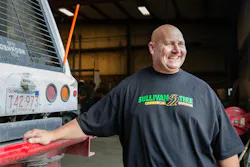
On a recent Saturday afternoon, a customer walked into a Sullivan Tire Co. Inc. location with what felt like a “semi-emergency.” Their daughter, who was visiting, arrived with a low tire and a “very weird sound” coming from her car.
The situation was resolved quickly and Sullivan Tire’s staff were “so accommodating and helpful from the first person who answered our call through the pickup and payment process,” the customer wrote. What stood out even more was the relief and confidence Sullivan Tire provided on the fly, in the customer’s own words:
“Fixing a tire on a Saturday afternoon, last-minute. So grateful for the service and the peace of mind knowing our daughter wouldn't be driving home on a bad tire. Big thank you."
For Joe Zaccheo, Sullivan Tire’s president and CEO, that kind of feedback isn’t new. What is new — nearly two-and-a-half years after the company became employee-owned — is the dealership’s sense of urgency and intensity.
“We had that type of culture before, but it's more intensified now,” says Zaccheo. “There's a sense of ownership — really going the extra mile — and that's a clear-cut example.”
Amplifying company culture
Since implementing its employee stock ownership plan (ESOP) in late-2023, Sullivan Tire hasn’t reinvented its culture. It’s amplified it and this shows up in subtle but meaningful ways across the company’s 130 locations, which includes retail stores, commercial tire centers, retread plants and warehouses.
“I’d say the level of engagement has increased and there’s a sense of urgency,” says Zaccheo. “There’s more teamwork.”
That teamwork has been especially visible in the company’s distribution operations, where efficiency is continuously improving.
“You can see that when you walk through the distribution center,” says Zaccheo, pointing to tighter coordination, which ensure “tires get loaded correctly and get to the right store at the right time.”
At the store level, the changes are just as tangible, with technicians staying late to finish jobs, employees stepping in to help one another and a shared willingness to push a little harder.
“I think it's going the extra mile,” says Zaccheo. “Whether it's staying a little longer to complete a repair or tire installation on a vehicle, being more cautious on watching expenses … or taking care of one another… I think it's just caring for one another that has intensified.”
Thinking like owners
One of the most significant — and perhaps least visible — shifts has been in how employees think.
“They want to understand the cause and effect of revenue, expenses and how does that impact the share price of the stock, so they're asking more business-like questions,” says Zaccheo.
In other words, employees are beginning to think less like workers and more like owners.
That mindset shift is central to how Sullivan Tire frames ownership internally. Employees aren’t just participants in a retirement plan thanks to the company’s ESOP. “They’re stewards of resources,” says Zaccheo. “You want to make sure you're making the right decisions with the funds available.”
That philosophy is influencing day-to-day decisions, from controlling expenses to improving workflow efficiency, and it’s reshaping how teams collaborate across locations.
“It's about sharing best practices, trying to be better every day, learning more from each other, sharing what works, so that in the long run, if we're all doing better each day, that will eventually lead to a higher share price.”
Measurable impact
While cultural shifts can be difficult to quantify, Sullivan Tire is seeing hard data that demonstrates the ESOP’s measurable impact. Most notably, employee turnover dropped significantly.
“Our turnover was reduced by 10% last year,” says Zaccheo. “That’s a big percent to change in one year.”
That improvement comes at a time when tire dealerships across the country continue to struggle with recruiting and retention.
For Sullivan Tire, the ESOP has become a powerful differentiator in recruitment conversations, especially with younger technicians and managers.
“It’s definitely a differentiator with us versus the competition,” says Zaccheo. “We’re able to offer young technicians ownership in a growing company that other companies can’t offer.”
And the long-term impact is easy to communicate. “The stats are (that) employees who retire from an ESOP-run company retire with two-and-a-half times the retirement savings than working for a non-ESOP company,” he notes.
Making ownership real
If ownership is the goal, understanding is the prerequisite. Sullivan Tire has invested heavily in ensuring employees not only participate in the ESOP but also understand it.
“At a high level, it's a relatively easy concept, but when you start digging into the layers and the details of it, it does get a little bit complicated,” says Zaccheo. “So it's just an ongoing communication strategy we have here to make sure people understand what it is.”
Sullivan Tire has built a multi-layered communication strategy that includes an ESOP communications committee that visits stores annually, human resource department-led sessions reviewing individual ESOP statements, monthly company videos with ESOP updates, a frequently asked questions resource and a dedicated email inbox for employee questions.
How the company talks about its workforce also plays a role in bringing the ESOP to life. “When we address our employees, we address them all as employee-owners,” says Zaccheo.
That subtle shift in language reinforces a broader shift in identity — one that employees themselves are embracing. “(There’s) a sense of pride. We now have skin in the game.”
Leading through a new lens
The ESOP hasn’t just changed how employees think. It’s also reshaped how Sullivan Tire’s leadership approaches decision-making.
Because the company is now owned through an ESOP trust, executives operate with a different level of responsibility. “We are now fiduciaries of a trust,” says Zaccheo.
That means decisions are no longer made solely with ownership interests in mind, but on behalf of the entire employee base. “The due diligence process is a little more defined as we are representing all the employees of the company,” he explains.
That added layer of accountability reinforces the same principle being emphasized across the organization: stewardship.
A competitive and cultural advantage
Beyond internal impact, Sullivan Tire’s ESOP is beginning to influence how the dealership is perceived externally. Customers are taking notice.
“Frequently, we have customers comment and say, ‘I want to support employee-owned businesses,’” says Zaccheo. “They like the concept.”
Sullivan Tire has leaned into that perception by incorporating “employee-owned” into its branding, advertising and communications.
At the same time, competitors and industry peers are asking questions. “We've had a couple (of) competitors ask about ESOP and then we've also heard from companies that we do business with,” says Zaccheo. “They’re curious about the basics. How does it work?”
For many, the appeal goes beyond motivation.
“It’s a succession planning mechanism,” he says. “It's a great way to maintain the culture of your company (and) keep the values in place. A lot of times, it's the employees who have made the company successful, so it's a way of rewarding them for their hard work.”
More than a retirement plan
At its core, Sullivan Tire’s ESOP is a retirement plan. At the same time, it’s also more.
“It's not like the 401K where you put your own money in,” says Zaccheo. “You put your time, your commitment to the company, your contribution, your productivity (in).”
Employees don’t invest their own money. They earn shares over time based on their contributions to the business.
Nearly three years in, the ESOP’s impact is being felt far beyond long-term financial planning. It’s changing how employees show up each day, serve customers, collaborate with co-workers and think about the business as a whole.
“I would say yes,” Zaccheo says when asked if the company has achieved what it set out to do. “The ESOP's in place. It's working. We're on our third valuation and statements for this year and we're having great success with the concept.”
About the Author
 Sara Welch
Sara Welch
Managing Editor
Sara Welch is Modern Tire Dealer's managing editor. She is an award-winning journalist who covered agriculture in Ohio, Pennsylvania and West Virginia for 10 years and sports for five years before coming to MTD. She can be reached at [email protected].