Technology Drives U.S. EV Tire Market's Future
Key Highlights
- Leading tire manufacturers say federal incentive rollbacks have slowed short-term EV sales, but long-term growth trends continue for the U.S. market.
- Tire companies are shifting focus from EV-specific to EV-compatible products, emphasizing durability, efficiency and performance to meet evolving consumer and OEM demands.
- Demand for EV tires is expected to remain steady, with replacement cycles driven by vehicle weight, torque and wear rates.
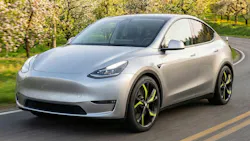
When President Donald Trump signed the One Big Beautiful Bill Act last summer, federal consumer incentives for purchasing new or used electric vehicles (EVs) in the U.S. were largely eliminated, effective after Sep. 30, 2025.
The incentives, which were part of former President Joe Biden’s Inflation Reduction Act, allowed consumers up to $7,500 for purchasing a new EV or up to $4,000 for a used EV and were set to run through 2032.
Before the deadline for incentives, many consumers raced to take the plunge and purchase an EV, which led to a short burst in sales. The U.S. EV market cooled down after the credits expired.
Many major automakers have scaled back their EV plans in terms of investment and production, with numerous companies reporting year-over-year sales being down 60% to 70% or more during the first quarter of 2026.
However, consumers are still buying EVs. Cox Automotive’s recent sales report found that even though total EV sales during the fourth quarter of 2025 dropped to 234,000 units — down 46% compared to the previous quarter and 36% lower year-over-year — last year was still the second-best year for EV sales in the U.S.
“With federal incentives gone, the first quarter reflected a necessary reset (as) sales slowed and market share shifted,” says Stephanie Valdez Streaty, director of insights at Cox Automotive. “What comes next will be driven less by policy and more by fundamentals: more affordable products, smarter pricing strategies and continued investment in infrastructure. Those longer-term fundamentals continue to support EV growth. The timeline has shifted, but the direction hasn’t.”
As this space continues to evolve, many tiremakers are continuing to expand their offerings and reach by investing and producing both EV-specific and EV-compatible tires that are suitable across electric, hybrid, crossover and internal combustion engine vehicles.
MTD recently connected with tire companies that produce and/or sell EV-specific and EV-compatible tires to understand how they’re viewing the current U.S. EV market and what their top priorities are for the coming year.
MTD: In light of recent rollbacks of EV vehicle incentives by the federal government, what is your view of the future for EV tire production and demand?
Keith Calcagno, chief strategy officer, proprietary brands, American Tire Distributors (ATD): We believe the rollbacks have slowed short-term new EV sales, but it does not reverse the long-term structural demand for EV tires. EV tire demand growth will moderate, but it will remain durable and increasingly replacement-driven rather than purely OEM-driven.
Karl Jin, divisional head, product and pricing, Apollo Tyres Ltd.: With the rollback of federal EV incentives and recent moves by Honda, Ford and others, EV growth in the U.S. could lose traction in the near term, affecting both OE and replacement tire demand. Our response is to stay focused on EV-compatible technologies that can serve the market as it evolves, rather than depend on a narrow EV-only segment.
Michael Mathis, president, Atturo Tire Corp.: Dropping federal tax incentives had an immediate impact on new EV sales. However, demand for used EVs has increased. There is still a growing interest in these vehicles by consumers. The demand for EV tires will continue, but growth may be slower than expected as new EV sales stagnate. If higher fuel prices persist, it may drive further interest in EVs.
Ian McKenney, senior product manager, Bridgestone Americas Inc.: While recent federal rollbacks of EV incentives and pauses in certain OEM projects have led to downward-adjusted industry forecasts, EVs remain a growing segment. The market share continues to expand, though at a more moderate pace than originally projected. We continue to monitor these dynamic conditions and adapt our strategy and we fully expect demand for EV-capable tires to keep increasing over the long term.
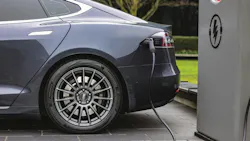
Björn Gläser, head of product, PLT, Continental Tire the Americas LLC: All our current tires not only fulfill the needs of electric vehicles but also help to reduce combustion engine emissions over the long term. Developing tires essentially involves optimizing the (components) of safety, efficiency and comfort. Important properties here include braking performance, handling, rolling resistance, service life and noise emissions. Our tires have to pass a variety of tests. Before they enter volume production, new tire models cover around 25 million kilometers every year on roller drum test rigs and test tracks.
David C. Poling, vice president, R&D and technical center, Giti Tire North America Inc.: For many reasons, EV sales in the U.S. are beginning to decline. Part of this is a rollback on incentives. Part of it is the saturation of early adopters. Part of it is the lack of infrastructure. Americans love their trucks and their horsepower and that’s not about to change anytime soon. For Giti, we will continue to push our technology for improvements in overall tire efficiency. As a key global manufacturer, supplying tires to many OE EV manufacturers, we have the technology to deliver what the OE and replacement markets demand. For the U.S. market, we will not be focusing on specific EV-only lines, which are too limited in scope, but instead will focus on making sure our tires are all EV-compatible, or as we say, EV-ready. If the market shifts considerably in one direction, we are poised to respond quickly.
David Wang, managing director, Gripmax Tires Inc.: In my view, the short term will be more price-sensitive and pragmatic, but the long-term need for EV-oriented tire technology remains intact. The market will shift away from ‘EV’ as a pure marketing label and toward products that can genuinely deliver measurable value in range, noise, durability and load capability under real U.S. driving conditions.
Robert Nasca, product training manager, Hankook Tire America Corp.: Policy changes may influence short-term adoption, but I feel long-term demand remains steady. EV and all-weather tires continue to be among the fastest-growing segments in the U.S. EV owners tend to adopt new technology early and that extends to their expectations for tire performance, including range, durability and low noise. Our iON lineup is designed to meet those expectations and provide clear options for EV drivers in the replacement market.
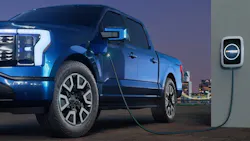
Shawn Denlein, president of sales and marketing, Kumho Tire U.S.A. Inc.: Although there’s been a recent slowdown in the EV market, we believe EVs still have high appeal to consumers and electrification in the automobile market will continue long-term. To adapt to fluctuating demand, Kumho’s strategy is to develop high-quality products that deliver premium performance across both EVs and gas-powered vehicles. With this direction, Kumho will be able to efficiently provide solutions, regardless of where the industry goes.
Adam Homan, development engineer, Linglong Americas Inc.: In the short term, the replacement growth will be strong, with a portion of 3 to 4 million EVs in the U.S. entering their initial replacement cycle. While both domestic and international car manufacturers have scaled back their EV plans, lowering previous forecasted segment growth, future growth will be more tied to continuing technology development (battery) and other market conditions than government subsidies. The fundamental need for EV tires remains. Physics, not policy, dictates that these vehicles require suitable tires.
Celine Faure, brand manager, Michelin North America Inc.: As Michelin's strategy is to propose EV-ready tires instead of EV-specific tire lines, our production strategy is naturally balanced and resilient to market fluctuations. Michelin’s technological leadership in composites makes it possible to develop high-quality tires for all forms of mobility. Michelin’s overall approach to tires allows our customers to choose their tires based on their usage rather than their car’s engine. Whether the tire is labeled a summer, winter, all-season or sport tire, a Michelin tire delivers a wide range of technologies, for all purposes and regardless of the vehicle.
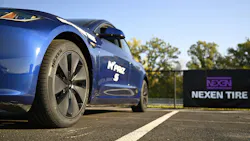
Jay Lee, product planning director, Nexen Tire America Inc.: While recent rollbacks of federal EV incentives may create some short-term uncertainty in EV adoption, we believe the overall long-term outlook for EV tire demand remains strongly positive. In the near term, reduced incentives could slow consumer adoption, particularly in more price-sensitive segments, and may lead to temporary adjustments in OEM production plans. However, the structural drivers of EV growth — including continued OEM electrification strategies, expanding charging infrastructure and tightening emissions regulations — remain firmly in place. From a tire industry perspective, it is also important to note that EVs tend to generate higher replacement demand due to their heavier weight and higher torque, which can lead to faster tire wear compared to conventional vehicles. This makes durability an increasingly important factor for both consumers and manufacturers. For example, Nexen Tire’s N’Priz S offers an 80,000-mile warranty, reflecting our focus on delivering extended tire life even under the demanding conditions of EV applications. Nexen Tire is well-positioned to navigate this environment through its EV-compatible product strategy.
Dave Johnston, director of portfolio, pricing and business planning, Nokian Tyres Inc.: We are taking the long view of EVs. They’re here to stay and they will remain a priority for Nokian Tyres at the global and North American levels.

Rob Montasser, Omni United (S) Pte. Ltd.: As recent global developments and their impact on oil prices have reminded us, the world is unpredictable, so we won't pretend to know the exact pace at which the EV segment will continue to grow. That said, to ensure Radar is prepared for all potential outcomes, the majority of the tires we develop going forward will be EV-compatible.
Ian Coke, vice president of technical strategy and customer relations, Pirelli Tire North America Inc.: We remain confident in the long-term trajectory of electrification in the U.S. market. From a tire perspective, demand is closely tied to the vehicle parc evolution. As more EVs enter the market and remain in circulation, the replacement tire segment will grow steadily. In short, we see any near-term fluctuations as transitional rather than structural and we continue to plan for long-term growth in EV tire demand.
Matthew Hanchana, senior director, technical and product development, Prinx Chengshan Tire North America (PCTNA): While the rollback of federal EV incentives may slow adoption at the margins, I don’t see it materially changing the outlook for EV tires. The reality is EVs are harder on tires. Between the added weight and instant torque, wear rates are higher and that drives consistent replacement demand. We’re also past the point where manufacturers can simply pull back. Too much has already been invested in EV-specific tire development and these products serve a different performance need than standard passenger tires. What I do expect is a shift in how companies plan. Instead of building around aggressive EV forecasts, production will likely track closer to actual sell-through and real-world usage patterns.
Jared Lynch, vice president of sales, corporate accounts, PLT, Sailun Tire Americas: Incentives can influence timing, but they don’t change direction. EV adoption may ebb and flow in the short term based on policy, but the long-term trajectory is firmly intact. Automakers remain heavily committed to electrification, infrastructure continues to expand and perhaps most importantly, consumer expectations have shifted. Once drivers experience EV performance, it’s a very hard product to walk away from. From a tire perspective, demand is even more resilient. EVs tend to wear through tires faster due to their weight and torque characteristics, which means replacement cycles are shorter and more consistent. As incentives taper, value becomes even more critical and that’s where the Sailun ERANGE stands apart. We see a market that’s not slowing down. It’s simply becoming more rational, more competitive and more focused on value.
Joaquin Gonzalez Jr., president, Tire Group International LLC (TGI): I think the rollback of federal incentives will slow things down in the short term, particularly from an adoption standpoint, but it doesn’t change the long-term trajectory. EVs are still where the market is headed — just maybe at a more measured pace. From a tire perspective, I actually think this shifts the opportunity toward EV-compatible products rather than strictly EV-specific ones, because consumers will still want efficiency, comfort and durability across hybrids, crossovers and traditional vehicles. So demand is still there. It just becomes more about building the right product with the right balance of performance and value.
Todd Bergeson, senior manager, product planning and technical services, Toyo Tire U.S.A. Corp.: Electric vehicle manufacturers have made significant investments in factories, tooling and infrastructure. The future of battery technology and production efficiency is looking very bright. The initial costs of launching an EV start-up are astronomically high. The federal and state incentives help offset those costs for customers, especially on the high-spec, high-profit models that manufacturers must sell early to recoup their investments. Most of the dedicated EV manufacturers are now profitable and can focus on making vehicles that appeal to the masses, not just the wealthy early adopters.
There are some very cool vehicles on their way to the market that address the wants and needs of consumers. Tesla has done a great job of attracting consumers to their Model 3 and Model Y vehicles with reasonable purchase prices, great utility and performance and a charging infrastructure second to none. Rivian is tailoring its vehicles to adventure and lifestyle customers and they’ve done a great job of developing truly capable and innovative vehicles that provide a solid solution for consumers who want to get off the beaten path and explore with their EV. There is much fanfare surrounding their R2 platform and it will be exciting to see how it progresses. The upcoming Scout is taking a similar approach to Rivian by building off-road-capable EVs that are feature-rich and highly stylish and capable.
Toyo is keenly focused on providing EV tires with true performance, without sacrifice. Our Open Country A/T III EV does just that. As fuel prices hit all-time highs and at $6+ per gallon, Americans are incentivized in a different way to search for ways to save at the fuel pump or avoid the fuel pump altogether.
Jeffrey Zhang, general manager, international business department, Zhongce Rubber Group Co. Ltd. (ZC Rubber): We believe the long-term trend of EV development will continue. This is supported by factors such as rising global energy prices and the ongoing improvement of charging infrastructure. These conditions still encourage consumers to consider electric vehicles as a practical and economical choice.
MTD: What are your company’s short-term and long-term plans for investing and producing tires for the U.S. EV market?
Calgano (ATD): Our position is to stay close to the market and meet our customers’ needs. We have been studying the EV market over the last five to six years and continue to reshape our overall strategy. Given the rapidly changing and dynamic market conditions, there are no concrete plans for us to become heavily invested in the EV tire market.
Jin (Apollo): In the short term, we are launching Hypertrac EV in the U.S. replacement market with seven extra load sizes in the most relevant applications, delivering the right mix of ultra-high performance all-season capability, comfort, low noise, durability and mileage confidence. Over the long term, we do not see EV as a separate niche. As EVs move toward roughly 30% of new vehicle sales, requirements such as higher load capacity, lower noise, durability under instant torque and rolling efficiency will become mainstream. Our strategy is to continue to make more of our portfolio EV-compatible, so our core product lines are ready to serve EV applications as the market evolves.
Mathis (Atturo): In the near term, our focus is on expanding the availability of HL (heavy load)-designated sizes within our line-up and ensuring that our existing all-weather and all-season products are properly positioned for EV and hybrid fitments. The Artis LHP launch represents a meaningful step in that direction, offering a tire purpose-built for the load characteristics and ride expectations of today's electrified vehicles. Over a longer term, our R&D investment is increasingly oriented toward compound development that balances three things EV drivers care most about: low rolling resistance to protect range, adequate load capacity for heavier vehicles and noise reduction for the cabin-quiet experience that electrified drivetrains make possible. We see a steadily growing opportunity in this space, as the EV and hybrid share of the U.S. vehicle fleet continues to grow and as more drivers begin replacing their original-equipment tires and looking for value-competitive alternatives.
McKenney (Bridgestone): In the short term, Bridgestone is focused on incremental improvement, applying learnings across our portfolio and preparing for the natural product evolution cycle. This includes our mid-term goal of incorporating ENLITEN technology into 90% of our product portfolio by 2030, ensuring the vast majority of our tires are EV-compatible. Our long-term vision is to advance toward producing tires made entirely from recycled and renewable materials, reflecting our broader commitment to sustainability. The Turanza EV already reflects this vision, incorporating 50% renewable and recyclable materials, among the highest of any commercially available replacement tire.
Gläser (Continental): Because all our tires can fulfill the needs of electric vehicles, we are always investing and producing tires for the EV market.
Wang (Gripmax): In the short term, our priority is not to expand capacity aggressively for its own sake, but to get the product definition and channel strategy right. In the long term, our strategy is to build platform-based products that can serve multiple powertrains while still addressing EV-specific requirements. We believe in the long-term opportunity of the U.S. EV tire market, but we intend to invest in a disciplined way: First, get the product right, then scale.
Nasca (Hankook): In the short term, we are focused on dealer education and market support in high-EV-adoption regions. Long term, we are investing in technology, global partnerships and product development to support electric mobility. Our strategy is to grow the iON brand and align closely with OEMs and consumers to meet real-world EV performance needs.
Denlein (Kumho): From touring to highway to all-terrain tires, Kumho’s main product lineup will be developed and mass-produced in an all-in-one structure compatible with both EVs and ICE vehicles.
Homan (Linglong): In the short term, we are developing new-generation tires with the EV-compatible feature by well balancing the needs for traditional tire performances like safety, comfort, handling, etc., and the performances required by EVs, like low rolling resistance, high load capacity and low noise. Long-term, we will closely monitor the EV tire market evolution in the U.S. and launch EV-specific tires with cutting-edge design and technologies.
Faure (Michelin): Michelin is committed to serve the consumers and tire dealers as its best, and our strategy has been proven to be the right one to absorb market fluctuations. Our long‑term focus is on shaping the future of sustainable mobility, guided by our ambition to produce an all‑sustainable tire made with 100% renewable and recycled materials by 2050. This objective is central to how we innovate for EVs and all emerging vehicle technologies. With 36 production sites across North America, Michelin is also deeply committed to our local‑to‑local manufacturing strategy, producing tires as close as possible to the customers who rely on them.
Lee (Nexen): Nexen Tire’s approach to the U.S. EV market is centered on scalable technology, long-term sustainability and flexible product development rather than relying solely on EV-specific tire segmentation. In the short term, we are focused on expanding our EV-compatible product portfolio, including the launch of products such as the N’Fera Sport and N’Priz S in 2026, while continuing to strengthen our OEM partnerships with EV manufacturers. As tire technology continues to evolve, we expect the industry to move toward achieving EV-level performance — particularly in noise and comfort — through advanced design, materials and simulation technologies rather than relying on add-on components.
Johnston (Nokian): Every Nokian Tyres product comes with the Electric Fit emblem that signifies it’s developed to be a seamless fit for electric vehicles. We have been testing tires on EVs for more than a decade and remain focused on meeting their unique demands: weight, noise, torque and range.
Montasser (Omnisource): We are tracking new EV fitments very closely and will be adding a significant number of sizes intended primarily for EVs. Most of these will carry extra load specifications, and some will also come in HL (high load) specs. Our Dimax All-Season EV currently fits the majority of popular EV sizes in the U.S. market. We will continue to expand this range in response to the demand we see.
Coke (Pirelli): In the short term, Pirelli North America is focused on expanding its EV-specific product portfolio across premium and prestige segments, including summer, all-season, as well as light trucks, strengthening OEM partnerships with electric vehicle manufacturers, and enhancing local supply chain flexibility to meet evolving demand. Over the long term, the company’s strategy centers on continued investment in R&D for advanced materials. The U.S. remains a strategic market for Pirelli and electrification is a core pillar of our innovation roadmap. We are committed to supporting the EV ecosystem with high-performance, safe and sustainable tire solutions.
Ken Coltrane, vice president, marketing and product development, PCTNA: While our group company is producing EV tires for other markets, for now, PCTNA is focusing on developing next-generation tires for its current product lines. As mentioned, they will include popular EV sizes with lower rolling resistance than the first-generation tires. We will continue to monitor the EV market as those vehicles in operation begin to represent a bigger piece of the pie. At some point down the road, we may decide that it is the right time to bring in our first EV-specific tires with additional features and benefits.
Lynch (Sailun): Our short-term approach is very straightforward: Focus on where the demand already exists and execute well. We’re expanding ERANGE fitment coverage across the highest-volume EV platforms on the road today — particularly in the sedan, crossover and SUV segments. EV tire knowledge is still developing across the industry, and we’re working closely with our partners to help bridge that gap. When a customer asks, “Do I really need an EV tire?” we want the answer to be clear, confident and grounded in real benefits. In the near term, winning in EV tires isn’t about complexity. It’s about coverage, consistency and value. Long term, we view EV tires as a core pillar of industry growth, not a specialty category.
Gonzalez (TGI): In the short term, we’re focused on expanding our EV-ready lineup in a very disciplined way, making sure we’re covering the right sizes and applications while continuing to improve on the key performance areas like rolling resistance, ride comfort, load capacity and tread life. Long term, we see this less as a separate EV category and more as part of the overall evolution of the tire market, so our investment is really around building smarter, more efficient products that can perform across EV, hybrid and traditional platforms. The goal is to stay ahead of where the vehicle market is going — not just react to it. That is why our Cosmo Kurrent is marketed as a premium touring tire that is EV-ready — not just an EV option.
Bergeson (Toyo): From an investment standpoint, we have been and will continue to invest in our U.S. manufacturing and R&D. These investments strengthen our ability to innovate and manufacture the tires people love — for the vehicles they love to drive.
Zhang (ZC Rubber): In the short term, we will focus on developing EV-specific and EV-ready tires for the replacement market, addressing key needs such as comfort, performance and extended mileage. In the long term, we plan to leverage our successful experience in the Chinese EV market and rely on our North American manufacturing footprint to expand into OE supply. We will continue to develop more products specifically for EV applications to support both replacement and OE demand in the U.S. market.
About the Author
 Aden Graves
Aden Graves
Associate editor
Aden Graves is MTD's associate editor. A graduate of Kent State (Ohio) University's award-winning School of Media and Journalism, Graves holds a bachelor's degree in journalism and another bachelor's degree in communication studies.