How Tiremakers Are Advancing EV Tire Technology
Key Highlights
- Tire manufacturers are transitioning entire portfolios to be EV-ready, emphasizing innovations in compounds, structural design and noise reduction.
- Top tire technology focuses include lowering rolling resistance, increasing load capacity and enhancing durability to handle heavier EVs with instant torque.
- Tiremakers emphasize that dealers should focus on customer education on proper tire maintenance and reinforcing trade-offs and efficiencies when selling and servicing EV tires.
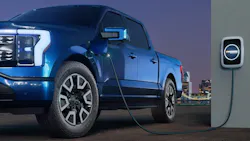
Despite a recent slowdown, the global electric vehicle (EV) market is projected to reach $6.5 billion by 2030, according to a recent report from Grand View Research.
As companies that produce EVs continue to improve battery technology, energy efficiency and increased performance, tire manufacturers that produce and supply EV-specific and EV-compatible tires are also refining their products and technologies.
In this MTD exclusive, manufacturers of EV-specific and EV-compatible tires discuss how this space is evolving and what tire dealers should keep on their radar.
“Based on our observations, many leading tire manufacturers are shifting their entire passenger/CUV/SUV portfolio to be EV-ready, rather than creating EV-only, or EV-dedicated SKUs,” says Keith Calcagno, chief strategy officer, proprietary brands, American Tire Distributors.
“With the U.S. vehicle car parc getting heavier, there is an exceeding emphasis for all tires to handle the torque, weight, noise and rolling resistance. Innovations and technological advancements in tire compounding, structural belt package and pattern/sidewall designs are pushing the frontier to level up every tire produced.”
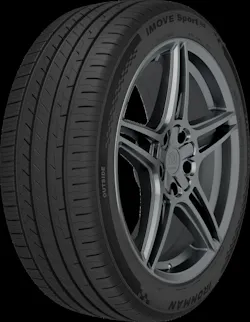
Karl Jin, divisional head, product and pricing, Apollo Tyres Ltd., says Apollo is focused "on tuning noise and rolling resistance to support range without compromising wear, as the market shifts toward EV-compatible products."
Customer education is equally important, since many EV owners expect ICE-like tire life, even though added weight and instant torque can accelerate wear.
"EVs bring new challenges, including higher vehicle weight and immediate torque delivery. Despite this, customers expect consistent tyre performance, driving our continued investment in technologies that effectively address these challenges."
Michael Mathis, president, Atturo Tire Corp., says his company’s position “is that any tire meeting the correct size, load index and speed rating for a given vehicle is suitable for use on a hybrid or EV. What truly matters is matching the tire to the driver's intended use — whether that’s spirited performance, daily commuting or all-weather versatility.
“On the technology side, two advances stand out: the heavy-load (HL) load index designation, which addresses the increased curb weight and instantaneous torque common to EVs and large hybrid SUVs, and cold-weather suitable tread compound engineering, where 3-Peak Mountain Snowflake-rated tires play a meaningful role.”
“The key innovations for EV-specific and EV-compatible tires in the U.S. focus on extending wear life and lowering rolling resistance, given the instant torque, heavier weight and alignment demands of EVs,” says Ian McKenney, senior product manager, Bridgestone Americas Inc. “Noise reduction is also a factor, since EVs lack engine vibration to mask road noise.”
Björn Gläser, head of product, PLT, Continental Tire the Americas LLC, says that for more than 10 years, Continental has “been optimizing our tires to achieve even lower rolling resistance, low rolling noise and long service lives — with zero compromise on safety. All these measures are now proving especially beneficial in vehicles with electric drive systems, too.”
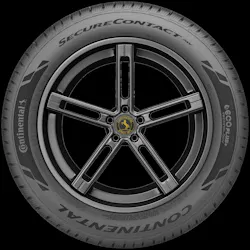
David C. Poling, vice president, R&D and technical center, Giti Tire North America Inc., says that “in order to discuss trends in EV tires, we should distinguish between EV-specific and EV-compatible. EV-specific are tires designed specifically for EV vehicles. EV-compatible are tires that can be properly used on EVs.
“EV-specific tires will target energy efficiency (range) as a main benefit while giving up treadwear mileage. This trade-off is the exact same trade-off that any OE tire, EV or ICE (internal combustion engine vehicle) makes.”
Jenny Walker, director of global product strategy, Goodyear Tire & Rubber Co., says EVs “have accelerated the need for tires that deliver low rolling resistance, advanced noise reduction and reinforced structures, but these attributes benefit a broad range of passenger vehicles,” while adding that “it is worth reminding (customers) that proper tire pressure maintenance is a key factor in driving rolling resistance down and therefore increasing the vehicle range and reducing CO² emissions.
“Noise comfort has become an important factor in the development of any type of vehicle,” she continues. “Therefore, drivers have become more aware of noise created by tires and road interaction. This is particularly relevant for electric vehicles that, due to the absence of an ICE, generate as little as half the amount of noise as traditional vehicles.”
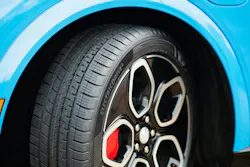
“In the U.S., EV tire development is clearly moving in five directions: lower rolling resistance, higher load capacity, lower noise, better wear performance and a dual-track strategy of EV-specific plus EV-compatible products,” says David Wang, managing director, Gripmax Tires Inc. “The reasons are straightforward. EVs are generally heavier, deliver instant torque and expose tire noise more clearly because there is no engine noise to mask it. At the same time, range remains a major purchase consideration for U.S. consumers, so rolling-resistance optimization is still a core engineering priority.”
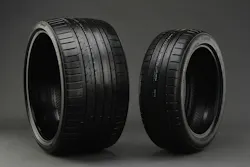
Robert Nasca, product training manager, Hankook Tire America Corp., says EV tire development “is focused on managing weight, torque and noise. This means advanced compounds for lower rolling resistance, reinforced structures for durability and tread designs that extend wear under instant torque.”
“With the rise in popularity of electric vehicles, tire manufacturers are choosing to go one of two routes with their product portfolio — either the dedicated EV tire route or the EV-compatible/EV-ready tire route,” says Shawn Denlein, president of sales and marketing, Kumho Tire U.S.A. Inc. “Currently, Kumho Tire’s strategy is to target both electric and internal combustion engine vehicles simultaneously.”
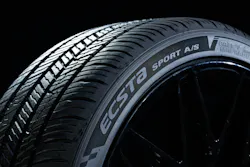
Jay Lee, product planning director, Nexen Tire America Inc., notes that the U.S. EV tire market “is currently evolving around three key areas: efficiency, noise reduction and durability. First, improving rolling resistance has become a top priority, as it directly impacts driving range, which remains one of the most important concerns for EV consumers. Second, because electric vehicles operate much more quietly than internal combustion engine vehicles, tire noise has become significantly more noticeable. As a result, manufacturers are focusing on advanced noise reduction technologies such as optimized tread patterns and internal sound-absorbing materials. Third, EVs tend to be heavier and deliver instant torque, requiring tires with reinforced structures and enhanced wear resistance to maintain durability and performance. In addition, the industry is increasingly exploring advanced materials and sustainable compounds, as well as smart tire technologies that can monitor real-time performance.”
“Our industry has become more skilled than ever at lowering rolling resistance, maximizing comfort and accounting for EVs’ weight and torque,” says Dave Johnston, director of portfolio, pricing and business planning, Nokian Tyres Inc. “As a company based in the Nordics, where electric vehicle sales are thriving, we have been working on EV innovations for many years now. In fact, every tire we produce is intended to suit the needs of EVs.”
Rob Montasser, Omni United (S) Pte. Ltd., says “tire requirements for EVs are actually very similar to what’s needed for high-performance combustion engine vehicles on the OE side: durability, stability, high load capacity, low rolling resistance and low noise. Because of that overlap, we’ve taken the approach of making all of our new premium collection tires EV-compatible.”
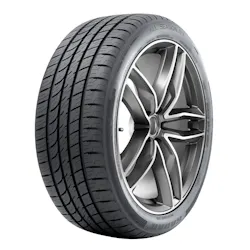
“The U.S. EV tire segment is evolving rapidly, driven by the unique demands of electric vehicles: higher torque, increased vehicle weight from battery packs and the need for extended range,” says Ian Coke, vice president, technical strategy and customer relations, Pirelli Tire North America Inc.
“As a result, several key trends are shaping innovation — low rolling resistance compounds to maximize battery efficiency and extend driving range; enhanced load capacity and reinforced structures to handle heavier EV platforms without compromising other tire attributes; noise reduction technologies, such as foam inserts, to compensate for the near-silent operation of EV powertrains, and instant torque durability, requiring new tread compounds as well as enhanced tread pattern designs to improve wear characteristics.”
Ken Coltrane, vice president, marketing and product development, Prinx Chengshan Tire North America (PCTNA), says that PCTNA “is not launching any EV-specific tires for the U.S. market.” However, its next-generation touring, H/T and ultra-high performance lines “will feature lower rolling resistance, as well as popular EV sizes.”
“The EV tire conversation has evolved quickly and today, it’s centered on three critical factors: range, durability and noise,” says Jared Lynch, vice president of sales, corporate accounts (PLT), Sailun Tire Americas. “Ask any EV driver what matters most in relation to tires and the answer is consistent: ‘How far can I go, how long will the tires last and how quiet is the ride?’
“From a technology standpoint, we’re seeing rapid advancement across the board: low rolling resistance, compounds that extend range, reinforced constructions designed to handle heavier vehicles and instant torque and noise-optimized tread patterns that enhance overall comfort. In many ways, EVs have elevated the performance standard for the entire tire category.”
Joaquin Gonzalez, president, Tire Group International LLC, says his company is observing “a clear shift toward lower rolling resistance to maximize range, higher load capacity to support heavier vehicles, reduced road noise and more durable compounds to handle instant torque and prevent premature wear. EVs simply demand more from a tire, so the technology has to evolve with it. You’re also starting to see more focus on smarter tire monitoring because efficiency and performance are directly tied to how the tire is maintained.”
Todd Bergeson, senior manager, product planning and technical services, Toyo Tire U.S.A. Corp., says that “by now, it’s widely recognized that EVs are amazingly quick and generally heavier than comparable internal combustion vehicles. The instant torque and added weight of EVs can be tough on tires, and drivers are more concerned about the range of their vehicle than their internal combustion counterparts. This leaves charging as the only real drawback. It is very easy to find a fueling station in the U.S. and fill up a tank, whereas charging an EV takes time and the infrastructure is still in its infancy. Time is a luxury, so owning an EV and driving one across the country can be less appealing when compared to an internal combustion engine vehicle. The charging infrastructure is improving, and the EV range seems to improve with every new model that releases, so this inconvenience may be temporary.
“I believe that the largest advancements and innovation with regards to tire technology will come out of the necessity to improve compounding, construction and materials to not only support the EV vehicles, but to do so in a way that reduces the impact on our environment.”
“In our view, for the U.S. replacement market, EV tire demand is evolving with some different priorities compared to OE,” says Jeffrey Zhang, general manager, international business department, Zhongce Rubber Group Co. Ltd./ZC Rubber. “While low noise, low rolling resistance and reliable grip performance remain important, consumers are paying more attention to tire mileage.
“In many cases, OE tires for EVs are developed with strong emphasis on noise reduction, rolling resistance and handling performance. In the replacement market, however, consumers may place greater value on mileage and overall cost efficiency.”
About the Author
 Aden Graves
Aden Graves
Associate editor
Aden Graves is MTD's associate editor. A graduate of Kent State (Ohio) University's award-winning School of Media and Journalism, Graves holds a bachelor's degree in journalism and another bachelor's degree in communication studies.