Hankook Uses U.S. Plant Investment to Make Top-Tier Case
Inside Hankook’s U.S. Strategy
- Hankook is using its Clarksville, Tenn., plant expansion and new proving grounds to show tire dealers how its U.S. investment supports product development, testing and domestic supply.
- The company is ramping up production in Tennessee, with plans to reach 10 million passenger and light truck tires and one million TBR tires annually at full capacity.
- Hankook is positioning its Dynapro lineup as a key growth driver in the SUV, CUV and light truck segments, while preparing to bring U.S.-made medium truck tires to market.
- For an insider's view, check out MTD's Hankook Tennessee Proving Grounds photo gallery.
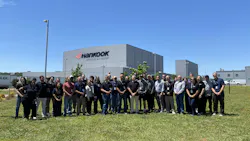
Hankook Tire America Corp. took tire dealers and distributors behind the scenes at its Clarksville, Tenn., plant during a recent ride-and-learn event, where autonomous robots nicknamed “Hanks” moved materials across the factory floor and brightly colored machinery transformed raw materials into finished tires.
The company used the event to show how its expanding U.S. manufacturing footprint supports its top-tier ambitions, noting that 95% of the plant’s production will remain in the U.S. and 99% will stay in North America.
Just outside the facility, those same products were put to the test on Hankook’s recently constructed Tennessee Proving Grounds — an off-road course designed to showcase the company’s growing Dynapro tire lineup.
The event format was part product demonstration and part manufacturing showcase, giving Hankook tire dealers and distributors a firsthand look at how tires are produced inside the company’s highly automated plant and how they perform on a test track built directly behind it.
“You got to see basically the birth of a tire and then you got to step right outside and see how it performs,” said K.C. Jensen, vice president of PC/LT sales, Hankook Tire America Corp.
Every aspect of the event allowed Hankook to tell a broader story about its U.S. investment, domestic production capabilities and growth plans in the SUV, CUV, light truck and commercial truck tire segments.
“We truly believe that we separate ourselves as Hankook and we have a story to tell,” Jensen said.
Tennessee Proving Grounds
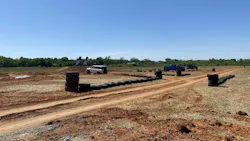
Hankook’s Tennessee Proving Grounds was completed shortly before the event, according to Rob Williams, president of Hankook Tire America Corp. Williams said the ride-and-learn marked only the second day the company had used the new track.
The proving grounds sit on the same property as Hankook’s Clarksville plant, allowing the company to pair a plant tour with a hands-on product demonstration.
“I think this is one of the most unique opportunities, especially with our customers and with the consumer that comes to our plant,” said Jensen. “We can show them how the product’s made and we take them right to Tennessee Proving Grounds and show how the tire performs."
The off-road course featured elephant tracks, logs, rutted corners, a sand pit, rock crawl, gravel pit and tabletop hill. Hankook also used a scenic drive from Nashville, Tenn., to Clarksville to highlight the on-road performance of its Laufenn X Fit AT2 and Dynapro AT2 Xtreme products.
Robert Nasca, product and marketing training manager for Hankook Tire America Corp., encouraged attendees to push the products during the drive.
“Brake hard. Gas hard,” Nasca told attendees. “I think you’ll be able to see what our tires are actually capable of.”
Dynapro anchors growth strategy

The event centered on Hankook’s Dynapro lineup, which serves the SUV, CUV and light truck segments. Nasca said Hankook sees continued opportunity in all-terrain and off-roading applications, noting that overlanding — self-reliant, vehicle-based adventure travel to remote destinations — “is actually really increasing right now across the U.S.”
Hankook highlighted three Dynapro products during the event: the Dynapro AT2 Xtreme, Dynapro XT and Dynapro MT2.
The Dynapro AT2 Xtreme is positioned as an 80% on-road, 20% off-road tire, according to Nasca. It carries a 3-Peak Mountain Snowflake rating and up to a 70,000-mile limited treadwear warranty.
The Dynapro XT is Hankook’s rugged-terrain option, which Nasca described as a 50/50 on-road/off-road product. It also carries a 3-Peak Mountain Snowflake rating and up to a 50,000-mile limited treadwear warranty.
The Dynapro MT2 is the most aggressive product in the line-up and is designed for mud, rocks and more demanding off-road use. Nasca said the tire is built to provide both off-road capability and ride comfort.
“All the Dynapro products that we’re talking about are going to be made in Tennessee,” he noted. “So we're very excited about that.”
Hankook also showcased its Laufenn X Fit AT2, an all-terrain product under Hankook’s secondary brand. Nasca said Laufenn products are made in many of the same factories as Hankook products, giving the brand a value position backed by Hankook’s manufacturing and technology resources.
Clarksville ramp-up

The event also offered a look at Hankook’s broader manufacturing investment in the U.S.
Hankook’s first phase of passenger and light truck tire production has been operating in Clarksville since 2017 and the company currently produces just under 15,000 passenger and light truck tires per day — more than 4.5 million units annually, according to Williams.
The Clarksville plant is expected to reach an annual capacity of 11 million units over the next 12 months, with construction of its multi-phase investment complete, as Hankook expands both consumer and medium truck tire production to achieve full capacity.
Williams said the company has already started phase two of consumer tire production at the plant, which was producing about 3,000 to 4,000 tires per day at the time of the event. Hankook is setting its sights on matching phase one’s daily output by the end of the year.
Hankook also has started producing medium truck tires at the plant, though those products have not yet been released into the market. Williams said the company is building inventory before distribution begins.
“We’ve gone through the testing phase, but we don’t release them to the market until we build up enough inventory,” he said.
Williams said Hankook was producing about 200 to 300 medium truck tires per day at the time of the recent ride-and-learn/plant tour event and expects it will take about 60 to 90 days to build enough inventory to begin distributing products into the market. The company’s goal is to reach full TBR capacity within the next 12 months.
At full capacity, the Clarksville plant is expected to produce 10 million passenger and light truck tires and one million TBR tires annually.
Leveraging domestic production
U.S. production is becoming an increasingly important part of Hankook’s strategy, particularly as fleets and dealers look for domestic supply options.
Williams said most of Hankook’s existing TBR products are coming from South Korea. U.S.-based production will allow Hankook to supplement that supply and target fleet customers who are asking for domestic products.
“A lot of the fleets are asking for domestic products,” said Williams. “They want the U.S.-made product. They also recognize that the supply chain has less constraints when you have product built in the U.S.”
Hankook also sees an opportunity with its commercial dealer network and wholesale partners to help expand its points of sale throughout the U.S.
The majority of tires produced at the Clarksville plant will stay in the U.S. According to Hankook, 95% of the plant’s production will remain in the U.S., with 2% going to Canada, 2% to Mexico and 1% to other markets.
Williams said that domestic focus is tied to both market demand and tariff considerations, with a special focus on expanding the Dynapro line-up.
“The U.S. market needs and wants that product,” he said. “So we’re building product that really is more specific for the U.S.”
Vertical integration
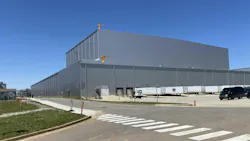
During the plant tour, Hankook highlighted the role automation and vertical integration play in its manufacturing process.
Inside the Clarksville facility, autonomous robots moved through the plant while machinery, worked in sequence to move tires from one production stage to the next. The plant incorporates lasers, robotic equipment, Hankook Engineering Works machinery and several quality-control inspection areas, including “no-shadow zones” designed to allow every surface of every tire to be inspected.
The Clarksville plant operates 24/7 and can produce a tire that is ready for the curing process in 37 to 40 minutes, according to Nasca. Bead wires are also being produced in-house at the plant.
Williams said the company’s vertical integration allows Hankook to control more of the tire development and production process, from research and development to tire molds and production equipment.
“But everything before that is very important, including things like doing our own 3D mold imaging, having the tire equipment that actually we use in our plants to build the product all the way through all the R&D,” he added.
That control, he said, helps Hankook manage quality, timing and speed to market. “When you’re vertically integrated, you really control the quality of your product all the way from R&D ... from the concept to getting it to the market and everything in between.”
Just the beginning
Hankook officials said the Tennessee event was part of a larger effort to better tell the company’s story to dealers, partners and consumers.
Jensen said that the company wants to continue building awareness around both the Hankook and Laufenn brands as it expands its U.S. production footprint.
“Building product in the USA, we believe we have a message to tell,” Jensen said. “It's also the 85th anniversary of Hankook Tire. We've been here a long time.”
For Hankook, the Clarksville plant and new proving grounds represent more than a manufacturing site and test track. Together, they give the company a platform to show tire dealers and distributors how its products are made, how they perform and why Hankook believes it can compete for a larger share of the U.S. tire market.
About the Author
 Sara Welch
Sara Welch
Managing Editor
Sara Welch is Modern Tire Dealer's managing editor. She is an award-winning journalist who covered agriculture in Ohio, Pennsylvania and West Virginia for 10 years and sports for five years before coming to MTD. She can be reached at [email protected].