New Technologies, Strategies Define the Future of ADAS Calibrations
Key Highlights
- Experts say tire dealerships should incorporate ADAS calibration to meet OEM requirements and ensure vehicle safety after repairs or modifications.
- Static calibration methods are gaining popularity due to their consistency and ease of use compared to dynamic calibration procedures.
- Industry leaders say educating customers about the importance of ADAS calibration can create new revenue streams for tire dealerships.
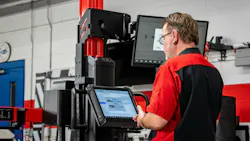
As vehicle manufacturers continue developing highly specialized advanced driver assistance systems (ADAS), there is a growing demand for independent tire dealerships to be equipped to perform calibration work to ensure safety and functionality.
Specific technologies and tools designed for tire dealers and technicians to use when calibrating vehicles have also evolved.
Offering ADAS-related services not only offers an outlet for shops to boost revenue, but it also protects drivers’ safety as “changes such as tire size, wheel fitment, ride height adjustments and vehicle alignments can affect ADAS performance,” according to Chuck Olsen, vice president of automotive technology solutions, AirPro Diagnostics.
MTD recently connected with several companies that specialize in designing, manufacturing and selling ADAS calibration equipment to understand the biggest trends shaping the broader ADAS conversation and how tire dealers can make sure their businesses are meeting the moment.
MTD: What’s new in ADAS calibration equipment?
Olsen (AirPro Diagnostics): Tire service shops will have to consider quite a few things related to ADAS calibration requirements and opportunities, depending on the other types of services they do beyond same tire size replacement, such as tire size changes, suspension work or alignments, not to mention tire pressure monitoring systems (TPMS).
A basic same tire type/size replacement by itself does not typically call for or require ADAS re-calibration. However, the TPMS system must be reset and function as tire pressure is used as a data point in many ADAS functions. But if tire size change affects vehicle speed, sensor input and/or vehicle ride height, this may trigger some ADAS calibration requirements, depending on what systems and sensor types the vehicle is equipped with. Changes in alignment of the vehicle, especially thrust angle, can also trigger calibration requirements.
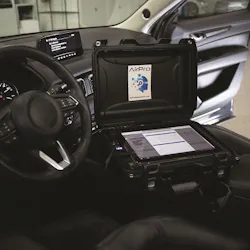
Stew Peregrine, senior executive of ADAS, Autel North America: The newest ADAS calibration systems should be designed to improve setup efficiency, increase accuracy, reduce human error and strengthen validation and reporting.
Michael Czorny, marketing manager, Launch Tech USA: As vehicle technology continues to evolve rapidly, we are actively expanding and developing new ADAS calibration targets and coverage solutions to stay aligned with the latest OEM requirements and vehicle applications.
Jordan Krebs, product manager, wheel alignment and ADAS, Americas, Snap-On Equipment: ADAS calibration equipment is continuing to expand to meet new and enhanced requirements for vehicle sensors. More OEMs are introducing Level 2.5 and Level 3 autonomous vehicles that rely on increasing levels of sensor fusion or multiple sensors working together to create a complete view of the vehicle’s surroundings.
As a result, ADAS calibration equipment manufacturers must remain in constant communication with OEMs to maintain approvals and ensure the proper targets are developed for accurate calibrations. New fixtures, placement targets, algorithms, calibration flows and even alignment specifications are required to fully check, place, calibrate and prove proper calibration.
Dennis White, education program manager, TEXA USA: Because of the need for wheel alignments within the world of modern tire dealers today, we now have ADAS running on the shirttail of the wheel alignments. If you are doing wheel alignments, you have to be able to do calibrations today. Modern cars that you’re aligning require calibrations after alignment.
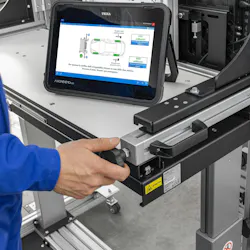
MTD: What are some of the trends you’re seeing in ADAS calibration equipment?
Olsen ( AirPro Diagnostics): There have been industry discussions and some early research that indicate ADAS performance may degrade or deteriorate over time. If this is confirmed to be the case, a shop that is equipped to perform ADAS-related calibrations could also offer recalibration as a maintenance item, whether there is a requirement for recalibration related to other services performed or not. Either way, being trained and equipped to identify and execute ADAS recalibrations effectively and accurately is becoming a reality for just about any automotive service operation.
Peregrine (Autel): One of the biggest trends in ADAS calibration equipment is the industry’s growing focus on identifying required calibrations tied to common repair procedures like wheel alignments, steering and suspension work. Too often, these critical safety systems are overlooked after a basic alignment, creating both a safety issue and a missed revenue opportunity for wheel and tire shops.
Many OEMs now require ADAS calibrations following these repairs, and modern diagnostic tools are beginning to clearly identify when those calibrations are required. At the same time, shops want systems that are faster, easier to use and capable of validating the work performed.
Czorny (Launch Tech USA): ADAS calibration procedures are increasingly trending toward static calibrations as the industry recognizes the challenges dynamic calibrations can present, especially in areas impacted by inclement weather and inconsistent road conditions. Static calibrations provide a more controlled and repeatable environment inside the shop, helping improve accuracy, consistency and workflow efficiency.
Krebs (Snap-On): Trends in ADAS calibration equipment closely follow those set by vehicle manufacturers. OEMs set the requirements for calibrations – including space or exclusion zones – target positioning, target size and design, and any secondary calibration combinations. It is the responsibility of equipment manufacturers to ensure their products and software workflows align with these requirements.
When executed properly, this results in a consistent calibration process and better protection for end-user shops performing final calibrations before vehicles are returned to customers. Adherence to OEM specifications, along with OEM-specific approvals, also supports shops when handling insurance claims, as it enables accurate reporting of ADAS target placement around the vehicle.
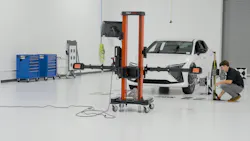
White (TEXA USA): When tire dealers and auto repair technicians are performing ADAS calibration adjustments, test drive the vehicle before and test drive the vehicle afterwards. Technicians should be sure to put the four tires on, drive the vehicle and operate the ADAS systems if they are there. Then, bring it in (and) align the vehicle. When you’re done, zero the steering sensor and calibrate the systems if need be. After that, test drive the vehicle again to make sure the ADAS systems work as they did before. Now, it becomes a bit more of a complicated process.
Additionally, calibrations should never be done for free. If tire and repair shops explain to customers that their new cars have features that are required and educate them on ADAS calibrations, it’s a new revenue stream for them.
One of the biggest challenges that we have in the ADAS world is that the roads are shared by many vehicles. In a perfect world, they would get rid of every vehicle that doesn’t have ADAS, but that’s not going to happen. The question is going to be: How do we incorporate all this new technology on the road with all of these cars that don’t have ADAS and how should they coexist? We share the world and roads together.
Technicians must be able to handle the technology of today and also work on yesterday’s cars. The demands of technology are getting harder, but it’s not outside the reach of anybody in the industry. As technicians, we are smart enough to figure this out. We just need to make sure we give them good information.
About the Author
 Aden Graves
Aden Graves
Associate editor
Aden Graves is MTD's associate editor. A graduate of Kent State (Ohio) University's award-winning School of Media and Journalism, Graves holds a bachelor's degree in journalism and another bachelor's degree in communication studies.