Dunlop Examines California’s Tire Rolling Resistance Mandate
What Tire Dealers Should Know
- California's new standards will require replacement tires to meet stricter rolling resistance and wet-grip criteria, impacting manufacturing, pricing and consumer choice.
- Tire manufacturers may face higher costs due to the need for advanced materials, more complex production processes and increased validation testing.
- Dealers will need to stay informed about regulation compliance, model testing data and effectively communicate changes to consumers.
- Industry leaders warn that focusing solely on one performance characteristic, like rolling resistance, could compromise overall tire safety and durability.
- Dunlop Tire North America's full webinar on the subject can be viewed here.

Since the California Energy Commission (CEC) approved the first fuel efficiency standard in the United States for replacement PLT tires, several major tiremakers have deep concerns of its impact on manufacturing capabilities, consumers, tire dealers and distributors.
While most companies support the program’s sustainability goals of reducing rolling resistance and improving vehicle efficiency, some manufacturers warn the policy is likely to raise costs for consumers and tiremakers, reduce competition in the replacement market and limit consumers’ choices when purchasing tires for their driving and vehicle needs.
Executives of Dunlop Tires North America (DTNA) – Darren Thomas, president and CEO, Ken Hsu, vice president of marketing, and Rick Brennan, associate vice president of TBR – recently spoke extensively on the Replacement Tire Efficiency Program through a manufacturing, consumer, dealer and broader industry lens during a webinar.
In a statement that DTNA recently released, the company said “the new rules do not fully address the complexity of tire design, since a tire is not developed around a single performance characteristic.
“Depending on the application, a tire is engineered to include a balance of rolling resistance, traction, tread life, durability, handling, load capability, weather performance, ride, noise and cost,” said officials.
“DTNA believes California must be equally careful to ensure that improving one of those characteristics does not unintentionally compromise the performance, choices, affordability and competition that consumers depend upon from the replacement tire market.”
During the webinar, the executives voiced their opinions on the rolling resistance mandate and outlined their top concerns on how the tire industry and broader automotive aftermarket will need to prepare ahead of the rule being implemented.
Starting in 2029, the new California rules state that replacement tires will have different rolling-resistance limits and wet-grip requirements by category. A more strict second phase will be implemented in 2033, which will place tighter guidelines on the replacement tires that can be sold in California.
In a recent statement, the CEC said it conducted its own testing and reviewed data from companies such as Discount Tire, saying “the regulation is cost-effective and feasible, and that there will be no adverse tradeoffs with tire lifespan, safety or other characteristics.”
The CEC said the first phase will add about $6 to the cost of a four-tire set for consumers while producing about $85 in fuel savings. Starting in 2033, the agency projects an added cost of $26 per set and $179 in fuel savings.
The California Tire Dealers Association (CTDA), along with other stakeholder groups including the Tire Industry Association (TIA), stated in a release that it remains “concerned about limiting consumer options, the significantly higher costs of compliant tires (which we believe to be significantly more than the CEC estimates), safety implications and the impacts on the waste tire volume in California.”
Throughout DTNA’s webinar on the subject, the company leaders reinforced Dunlop’s position that the state should evaluate a tire’s full lifecycle – from manufacturing and service life through replacement and disposal – instead of regulating one single performance attribute: rolling resistance.
The Dunlop executives referenced the “spider chart” – the group of performance features that are balanced when designing a tire – to explain the factors that are considered during the manufacturing process. Tire dealers are incredibly familiar with these characteristics, such as wet traction, treadwear, handling, durability, ride comfort and rolling resistance.
Tire manufacturers could face challenges
Brennan said when tiremakers focus on improving one particular performance aspect, like rolling resistance, they typically have to sacrifice another feature to keep the capabilities in balance.
“Tires are a complex elastic system that we really need to blend all of their needs together to come out with a compromise that best provides all the needs of the consumer, vehicle and the environment, which includes sustainability and efficiency,” said Brennan.
Dunlop’s leaders also reinforced the distinction between original equipment (OE) tires and replacement tires, arguing it is key to the rolling resistance issue because tire manufacturers produce those products for vastly different applications.
“It’s one thing for us to say, ‘Let’s optimize replacement rolling resistance,’ but that has got to be done within a framework of the purpose and intent of those replacement tires, not something attached to what the OEMs do,” said Thomas.
While the team said the industry doesn’t know the exact cost increase that average California consumers will face, factors such as tiremakers using more expensive materials, more energy usage, a more complex supply chain, additional validation testing and reduced competition is likely to raise prices.
If manufacturers, importers and distributors don’t sell as many products, supply will decrease, demand is likely to be stable and prices will rise, according to the team.
Since California has a long-term goal of achieving a specific replacement rolling resistance target, the tire industry has to take an in-depth analysis of what is possible from a cost perspective and tire performance point of view, said Thomas.
More demand on manufacturing capabilities could mean more expensive technologies needed to produce replacement PLT tires, which could then raise costs for customers, said Brennan. He said companies may have to add and relocate equipment to meet rolling resistance requirements and may also have to adjust rubber mixing practices.
“To make low rolling resistance tires that have great traction, we need to mix it more often, which means we need more giant Banbury mixers to be able to mix that rubber,” said Brennan. “That alone increases costs by a lot, and since you have to mix that rubber several times, it uses more electricity and more power. With just that alone, low rolling resistance means the tires are a bit more expensive.”
With the ongoing tier-down trend of consumers buying tires at lower costs and making more price-conscious purchasing decisions, it reinforces the need for manufacturers like Dunlop to find ways to meet those needs, said the executives.
How tire dealers, distributors will be affected
The impact of California’s rolling resistance mandate will stretch beyond tire manufacturers and consumers. Over the next few years, it will be increasingly important for independent tire dealers and retailers that operate in California to stay educated on how the regulation should be followed, said DTNA’s leaders.
The policy says tiremakers and tire brand owners must list model and testing information in a CEC database, which will need to meet applicable standards or exemptions before being authorized for sale.
At this early stage of the mandate, it’s not fully clear what programs or procedures will be necessary for dealers and retailers to ensure their covered inventories are eligible for sale. A larger tire store chain may have a vastly different way of monitoring its covered inventory than a family-owned, one-location dealership, said the Dunlop team.
Moving forward, tire dealers will have a critical role in explaining the changes to customers and ensuring they can access the correct tires that meet their vehicle needs and the newly-defined rolling resistance requirements.
“Retailers better be educated on the subject of low-rolling resistance tires,” Thomas said. “A retailer may have to explain why a certain tire isn’t available in California. Most consumers aren’t even going to be interested in this conversation until the day they need to replace their tires. That retailer will be at the front of that conversation.”
Throughout the webinar, the team repeatedly brought up managing proper tire inflation and consumer education on basic tire maintenance as more effective, practical solutions for gaining better fuel efficiency and collectively lowering CO2 emissions.
Next steps for the mandate
Though manufacturers, dealers and distributors have until 2029 to make sure they meet California’s fuel efficiency requirement, tire industry organizations still have questions about its requirements.
Major concerns include limited consumer options, decreased product competition, higher costs of compliant tires and safety implications.
Though the new rule will apply to most replacement PLT tires, the mandate will offer exceptions for certain specialty tires, such as competition tires, large off-road tires and all-weather winter performance tires. It also created product categories for long-life tires, ultra-high-performance tires, low-load-index tires and other tires with special characteristics.
While Thomas said it is unlikely that DTNA will challenge this mandate against the California legislature, the company will continue to work with stakeholders to make sure the entire automotive aftermarket is represented and protected.
“We want to achieve the best possible outcome in the end,” said Thomas.
More California Mandate News


 The first phase of the California Energy Commission's Replacement Tire Efficiency Program will kick off less than three years from now.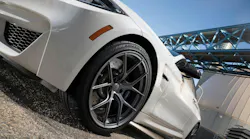
About the Author
 Aden Graves
Aden Graves
Associate editor
Aden Graves is MTD's associate editor. A graduate of Kent State (Ohio) University's award-winning School of Media and Journalism, Graves holds a bachelor's degree in journalism and another bachelor's degree in communication studies.