All Options Open: Discussing Consumer Financing Early
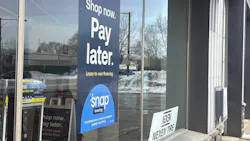
With household debt at an all-time high, there’s a good probability that retail tire dealers will see more cash-strapped, credit-limited customers in their stores — making the ability to offer alternative consumer financing even more vital.
“More than 70% of Americans do not have a prime credit score and nearly 70% consider themselves financially vulnerable or financially coping,” says Derek Medlin, president and chief growth officer, Katapult. “In addition, more than half report that they do not have sufficient savings to comfortably absorb unexpected expenses.
“Tires are often exactly that: an unexpected expense. When a customer is suddenly faced with an $800 to $1,500 expense, affordability becomes the deciding factor, regardless of income level or financial responsibility. If a dealer does not offer alternative financing options, their go-to-market strategy is already excluding a significant portion of U.S. shoppers.
But this is not just about customers who are declined for traditional credit products,” says Medlin. “Younger shoppers increasingly expect flexible payment options as part of the standard suite of checkout choices and many prefer the predictability of structured payments over traditional revolving credit. In fact, our recent U.S. consumer survey shows that among shoppers ages 25 to 44, more than half prefer structured payment options ... and roughly one in four prefer lease-to-own.
“Flexible payments are not a niche tool for younger consumers. They are a preferred way to pay. For dealers, this means the need for flexible payment options already exists within their customer base. It does not emerge only when sales slow. It reflects a broader reality that many qualified buyers simply need better ways to manage timing and cash flow.”
Independent tire dealers should consider offering lease-to-own options “as soon as they recognize they’re not capturing the most possible sales and customers,” says Charles Nance, vice president, business development, Acima.
Recent data shows nearly 106 million U.S. adults are considered subprime, including 57 million with nonprime credit scores, 28 million with no credit file and 21 million with limited credit histories — all to mean they have little to no access to consumer credit or financing options.
It's less about a singular tipping point that forces consumers to seek assistance “and more about creating another valuable revenue stream,” says Nance. “Dealers that offer flexible lease-to-own solutions immediately expand their customer base, drive greater sales and can capture more customers that would otherwise abandon their purchases when they cannot pay upfront.”
According to Tony Amitrano, chief revenue officer, PayTomorrow, dealers should take a proactive approach and inform customers that alternate financing options are available. “Most successful tire dealers will have financing available to their customers. Whether they sell the financing is a completely different issue.
“Just having financing available to your customers is not enough to make a meaningful positive impact on your business. Those tire dealers who do not accept this fact will simply be outsold by their competition.
It is imperative that consumers understand that financing is available as early in the sales process as possible,” says Amitrano. “Ideally, customers should be able to get preapproved prior to visiting the dealer. This can be done through the dealer’s website and/or any initial communications with the customer, like appointment confirmation emails. This not only provides the customer with a maximum spending amount before choosing their brand of tires. It also removes the requirement of the store manager to have to sell the financing at point of sale.”
Employee training is also imperative, he explains. “Even with the ability for customers to be preapproved prior to going to the dealer, successful tire dealers will train their staff to offer financing as an alternative payment method to every customer. The ability to offer multiple lenders, through a single application, will approve more customers and reduce the awkward conversations when a customer gets declined by a single lender.
“Unfortunately, the tipping point for most independent tire dealers is when they realize they are losing business to their competitors who are offering and selling financing through the entire sales process.”
“According to Synchrony’s latest Major Purchase Study, 83% of consumers expect to be presented with financing information during the early stages of the purchase process,” says Keith Mait, senior vice president and auto leader, Synchrony. “For consumers who are focused on affordability and monthly budgeting, an early introduction into financing options can improve the probability of sales success.
“Being prepared with financing options sends a very strong message. Conversely, if you’re an independent tire dealer who isn’t offering financing options, you’re likely missing out on vital sales opportunities.
“For tire dealers who have yet to act, the time to act is now,” adds Mait. “Start by seeking out credible financing partners that offer responsible, transparent and favorable consumer terms to encourage financial health and repeat purchase behavior. At a minimum, dealers should have at least one financing option available to help with consumer affordability. This is essential when you consider that, according to Synchrony’s InSynch Consumer Monthly Tracker, nearly one-third of Americans have trouble with an unexpected expense greater than $400, and nearly half are not confident when the expense jumps to $1,000.
“Retailers win when financing isn’t treated as a last resort, but as part of the sales strategy from the start,” says John Cullerton, chief revenue officer, Snap Finance. “The reality is you don’t know who’s cash-strapped or credit-limited. It could be anyone walking through your door. If you’re not clearly showing your financing options from the very first interaction, you’re likely losing sales and not even realizing it.
“When someone needs tires, they usually need them now. If they leave your store unsure whether they can afford the purchase, they won’t wait around. They’ll find a competitor who makes financing obvious and easy.
“Retailers don’t have to wait for economic pressure to mount to lead with financing,” says Cullerton. Offering accessible options upfront builds loyalty, increases close rates and lifts average ticket sizes, especially when customers are deciding between good, better and best tire packages.
“When financing is visible, normalized and easy to access, it becomes a competitive advantage that helps tire dealers close more sales, serve a broader range of customers and strengthen long-term loyalty.
“Across retail verticals, we’ve seen that when dealers clearly display point-of-sale signage, awareness and applications increase. If subprime consumers don’t know that they are welcome, they can become very hesitant to apply for normal credit and potentially face an embarrassing ‘your-application-is-declined’ moment. In fact, Snap Finance experience shows that retail locations that feature these point-of-purchase materials produce 44% more applications and 54% more in financed sales than those who don’t.
“Financing options also need to show up in your marketing,” Cullerton advises. “Digital ads, emails, social posts — even QR codes that let customers apply before they walk in — all build confidence and can increase ticket size. Train your team to lead with payment options, not treat them as a backup plan. When financing is introduced naturally in the sales conversation, customers are more open to it. And don’t forget past customers. Ongoing outreach keeps financing top of mind when the next repair or replacement comes up.”
"Independent tire dealers should ideally consider offering financing before they start seeing customers walk out the door due to price objections," says Sam Miller of Versatile Credit. "Additionally, many dealers find their tipping point throught operational frustration, realizing that managfing multiple individual lender portals manually is creating too much friction for their staff - leading to time-intensive consultations and potential confusion for the customer.
"With household budgets under pressure, financing has transitioned from a last resort to a strategic budgeting tool for many consumers. There is a significant misconception that higher-income earners aren't looking for financing. In reality, these customers increasingly utilize credit to maintain financial flexibility and manage their cash flow more effectively. Financing allows them to keep cash on hand for other priorities, while handling a necessary tire purchase through manageable monthly payments, regardless of their perceived credit profile.
"We anticipate more consumers will rely on these services in 2026 because tires are a necessity that cannot be postponed indefinitely," says Miller. "By offering a full spectrum of options - from prime to near-prime and subprime - dealers can overcome the myth that they know a customer's credit score or intent, ensuring they provide a solution that fits the actual needs of every driver who pulls into the shop.
"A critical component of a successful credit strategy is the ability to provide the most economically advantageous option for the customer. Technology like pre-qualification is essential here, as it provides a risk-free way for customers to explore their options via a soft pull that has no impact on their credit score. By showing customers exactly how their approved financing fits into their specific budget up front, dealers remove the fear of rejection and application anxiety. This transparency turns a potentially stressful service visit into a confident purchase, ensuring the dealer never misses a sale while helping the customer stay safe on the road."
“The most effective tire dealers do not wait until checkout to introduce payment options,” says Matthew Dishman, president and CEO, MyLendPro. “They build financing into the entire buying journey.”
Dishman offers several tips for dealers. “First, embed pre-qualification directly into the shopping experience. When financing is integrated inside tools like a tire and wheel visualizer or on the dealer website, customers can see payment options while they are selecting products. Showing estimated monthly payments early removes friction and keeps shoppers engaged.
“Second, promote financing across all marketing touchpoints. Website banners, service reminders, email campaigns, SMS, social media and in-store signage should consistently communicate ‘Buy Today, Pay Over Time’ and ‘Pre-Qualify with No Impact to Your Credit.’ When financing becomes part of the brand message, customers expect it.
“Third, train staff to introduce financing proactively. Service advisors should mention payment options during inspections and estimates, not just when a customer hesitates. Position it as a convenience tool, not a last resort.
“Fourth, use digital retargeting and follow up. If a customer shops tires online or abandons a cart, automated reminders highlighting available financing can bring them back. LendPro also provides this service directly from our portal.
“The most successful dealers normalize financing as a smart payment choice rather than an emergency solution. When shoppers lack liquidity, they delay the purchase, downgrade quality or move to competitors offering payment flexibility. That is why financing has become essential for tire dealers. Offering point-of-sale financing removes the upfront cost barrier, increases approval opportunities and allows customers to choose the tires they actually need, not just what they can afford that day.
“Looking ahead to 2026, demand will likely continue rising,” notes Dishman. “Consumers are increasingly comfortable using retail financing and ‘Buy Now, Pay Later’ options, and tighter credit conditions make embedded pre-qualification even more important. Dealers who introduce financing earlier in the buying journey will convert more shoppers and protect more sales.”
“The moment dealers see customers splitting purchases, deferring service or declining recommended work due to cost — that’s the sign you should be offering financing options,” says Rosilyn Rayborn, executive director, B2B marketing. American First Finance. “No one’s delaying the replacement of worn tires if they don’t have to, so when you hear things like ‘I’ll just do two for now,’ you (also will) know.
“Another clear sign? If you’re offering a single financing option and seeing a growing number of declines. If approvals are tightening and good customers are walking, it may be time to look at multiple payment solutions that serve a broader credit spectrum. At the same time, you don’t want to be in reactive mode, introducing financing as a last-ditch effort to save the sale at the counter. It should be a part of the operating model from the start. Dealers who treat financing as a core tool — not an emergency tool — typically see higher average tickets and repeat business.
“A decade ago, offering financing options in a tire store felt like a competitive advantage — a nice-to-have for the occasional customer who needed help,” Rayborn continues. “Today, it’s table stakes. According to a recent survey by Bankrate, only 47% of Americans say they have enough cash to cover a $1,000 emergency. That means an unexpected $800 to $1,200 tire purchase now competes with rent, groceries, childcare and utilities.
That’s why structured payments have moved from last resort to budgeting tool. Even customers with solid credit prefer flexibility. And that behavior isn’t likely to reverse in 2026. For independent tire dealers, financing is no longer just about serving credit-challenged buyers. A range of options — lease-to-own, retail installment agreements, bank installment loans — allows dealers to serve more credit profiles, increase approvals and protect average ticket size.
“The biggest mistake dealers make is hiding financing behind the counter. When financing only comes up after someone pauses at the price, it can make them feel put on the spot. The most effective dealers normalize it early and often. They position financing as a standard payment option — not a last resort. When it’s introduced proactively, financing helps customers feel empowered instead of uncomfortable.”
According to Rayborn, featuring consumer financing options online and training service advisors to introduce options early in the conversation are just some of the ways tire dealers can proactively educate customers. “When financing is visible, normalized and confidently presented, it strengthens trust. Customers feel supported — not singled out — and dealers protect both revenue and relationships.”
Katapult’s Medlin agrees that dealers should integrate financing options into interactions with customers as early as possible. “Normalize it in everyday conversations. Staff should introduce financing naturally (by saying), ‘We offer flexible payment options, if that’s helpful.’ This keeps the focus on solving the customer’s problem and removes any stigma.
“Incorporate it into estimates and proposals. Showing payment options alongside full pricing helps customers focus on manageability rather than just total cost.
“Make payment options visible early. Payment options should be clearly communicated across all customer touchpoints such as websites, emails, social media, online scheduling tools, product pages and in-store signage. When customers see affordable payment options upfront, they are more comfortable engaging and exploring their options.”
Medlin also recommends leveraging “simple digital tools. Fast, low-friction application and prequalification tools reduce hesitation and increase adoption, along with streamlined checkout experiences that minimize friction for service advisors and customers.”
And reinforce the concept “through follow-up communication” with customers. “Email and SMS can remind customers about available payment options, keeping affordability top of mind before and after visits.”
Commenting specifically on lease-to-own, Nance says Acima’s research shows “that of the 47% of consumers who are aware of lease-to-own, 31% will typically use it when making a large purchase — and this trend continues to grow. The key is making the option visible and understood as an attractive complementary option to upfront payments, credit card purchases or buy now, pay later options, all of which lock consumers into rigid financing terms or force them to cover large upfront costs.
“By offering lease-to-own, dealers can emphasize how customers can afford higher-quality tires than they initially thought possible to keep themselves safe and their vehicles on the road. The more consumers know, the more likely they are to shop and complete transactions.”
“It is imperative to inform your customers that financing options are available in as many platforms as possible,” says PayTomorrow’s Amitrano. “As stated earlier, allowing your customers to get preapproved prior to arriving at the tire dealer is one way to quickly increase the use of financing. This can be done through their website or (by) providing a link in the appointment confirmation email or any other customer communication prior to arriving to the dealer.
“Point-of-purchase materials are also very effective in promoting financing. These generally come in the form of table tents with QR codes, window clings, pop-up banners, etc. These materials allow customers the ability to scan a QR code and get preapproved on the privacy of their own device. Another way to introduce financing to the customers is when presenting their estimate/work order. Including a link to get preapproved, along with the estimate details, gives the customers an easy way to pay for the order.”
According to Synchrony’s Mait, consumers expect financing options to be introduced early in the purchase process, “ideally before the purchase process actually begins. In fact, when it comes to vehicle expenses, Synchrony’s Path to Purchase studies suggest that consumers evaluate options up to 30 days before purchase. Taking this into account, those dealers who present themselves and their offerings in a consistent multi-channel capacity that includes search, social, web, email, direct mail, local partnerships and more will position themselves for the greatest success.
“The most effective dealers will also be those who nurture those leads and upon engagement with consumers, share financing details before cost becomes a barrier. That means clear signage in-store, financing promotion on websites and appointment confirmations and most important of all, training staff to introduce monthly payment options during the initial conversation, not at checkout.
“When customers see financing framed as a planning tool rather than an emergency solution introduced at the 11th hour, it reduces sticker shock and helps them say yes to needed tires and related services with confidence,” he says.
Versatile Credit's Miller says dealers "should prioritize high visibilty on their website with features like payment calculators, allowing customers to see during their initial research that a set of tires could fit into a manageable monthly payment. In the shop, clear signage at the point of sale and in waiting areas helps normalize the topic before a formal quote is ever given. Additionally, sales associates should be trained to introduce special payment options early and often, as a standard part of the consultative process. This shifts the focus from a stressful total price to a manageable monthly budget, building trust and empowering the customer to choose the best, safest tires for their vehicle."
About the Author

Mike Manges
Editor
Mike Manges is Modern Tire Dealer’s editor. A 29-year tire industry veteran, he is a three-time International Automotive Media Association Award winner, holds a Gold Award from the Association of Automotive Publication Editors and was named a finalist for the Jesse H. Neal Award, the Pulitzer Prize of business-to-business media, in 2024 and 2026. A past Endeavor Business Media Editor of the Year, Mike has traveled the world in pursuit of stories that will help independent tire dealers move their businesses forward. Before rejoining MTD in 2019, he held corporate communications positions at two Fortune 500 companies and served as MTD’s senior editor from 2000 to 2010.