Vehicle Charging Systems Continue to Evolve
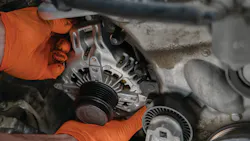
Vehicle charging systems continue to evolve and in order to stay current, technicians’ skills must advance accordingly, according to Cody Hicks AutoZone’s director of merchandising, customer satisfaction.
“Back in the early 2000s, we started to see manufacturers move toward computer‑controlled charging to keep up with growing electrical demands,” he says. “Since then, vehicles have added more sensors, more comfort features and more electronics overall, which increases the importance of proper system diagnosis and having the proper diagnostic tools readily available.”
Over the last decade, “smart charging systems have become the norm. One of the biggest shifts has been toward LIN‑controlled alternators. These units don’t just generate power. They’re constantly talking to the vehicle’s ECU. That communication lets the system fine‑tune voltage output, protect the battery and even helps improve fuel efficiency by adjusting the alternator load depending on system requirements needed at the time.
“These systems typically run in two modes: a full‑charge mode and an efficiency mode,” says Hicks. “The ECU uses feedback from the alternator and battery current sensors to decide what the vehicle needs at any moment. And because the system actually learns the battery’s condition, installing a new battery usually requires an ECU reprogramming — or system relearning — so the charging strategy resets and adjusts properly.
“While the technology is still relatively new, we’re now entering a phase where more of these systems are reaching the age where failures, repairs and replacements are becoming more common. The biggest thing to keep in mind is that quick visual checks aren’t enough anymore. If a customer shows up with a weak battery or a battery warning light, you really need to hook up an advanced diagnostic scan tool to get an accurate read on what’s going on.
“Modern charging systems rely on multiple sensors and smart components, which means there can be several different failure points and not all of them are obvious. A diagnostic scan tool can help pinpoint whether the issue is the battery, the alternator, a sensor, a control module or even if a software‑related update is needed.”
Hicks adds that it’s important “to check your shop management system or service information before installing a replacement battery/starter or alternator. Many newer vehicles require battery registration or a relearn procedure after the install. Skipping that step can lead to undercharge or a no charge situation, which could lead to customer comebacks, even if the battery/alternator has just been replaced and are both operating correctly."
About the Author
 Mike Manges
Mike Manges
Editor
Mike Manges is Modern Tire Dealer’s editor. A 29-year tire industry veteran, he is a three-time International Automotive Media Association Award winner, holds a Gold Award from the Association of Automotive Publication Editors and was named a finalist for the Jesse H. Neal Award, the Pulitzer Prize of business-to-business media, in 2024 and 2026. A past Endeavor Business Media Editor of the Year, Mike has traveled the world in pursuit of stories that will help independent tire dealers move their businesses forward. Before rejoining MTD in 2019, he held corporate communications positions at two Fortune 500 companies and served as MTD’s senior editor from 2000 to 2010.