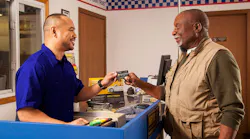
Kingman: Customer Service Versus Customer Care

Having great customer service is the expectation of nearly every business model, but one might argue that this isn’t true in every industry. Anyone who has ever had to call their cable company can attest to this!
That said, nearly all businesses have customer service. Very few have customer care. Customer care is the ability to understand the needs of the customer at a much deeper level, show empathy towards the customer and deliver what the customer needs more than what they are asking for.
Let's explore the difference between empathy and the age-old adage of "selling with your own wallet." Empathy is understanding what your customer needs and seeing the relationship and today’s transaction through their eyes. Empathy has nothing to do with discounting.
A couple of months ago, I was in one of my favorite restaurants. I am a loyal customer who visits this place easily 15 to 20 times annually. On this occasion, the acting manager was working at the host stand. He went through the explanation of the wait times, which I had zero issues with, but he was very blunt and, to be honest, downright rude. I replayed the conversation in my head and asked myself exactly what did he say that upset me? I was actually in a great mood when I came into the place. I was excited to show one of my favorite restaurants to my sister and her family who were visiting. They didn’t even witness this verbal exchange, so I wasn’t embarrassed by how rude this was starting out. But the one thing that I know for sure is I was in a great mood walking in and I was upset after our interaction. The rest of the meal and experience was perfect. The food was great. The staff was great. Everything else was great. But I couldn’t take my mind off the guy who put me in a bad mood.
By the definition of customer service, he did everything right. He followed the rules of the establishment and put me on the wait list. So, what’s the problem?
I know many of you have been to Chick-fil-A, and whether you like their food or not, I am sure you’ve heard about their service. I’m also sure you all have an opinion of the service at Taco Bell or Burger King. I’m not taking away from either of those restaurants. I actually think a Whopper tastes better than a Chick-fil-A sandwich, but I also know I’m far more likely to be frustrated when I get my sandwich from Burger King than I would be leaving Chick-fil-A. What’s even more remarkable is that I can still be frustrated at my local Burger King, even though everything in the bag was right, but understanding and not upset if something was wrong in the Chick-fil-A bag. That is the essence of what customer care can mean for you and your business.
Customer care — to be effective for you and the brand you represent — has to be a way of life, all the time. Let me give you a great example I’m sure all of us can relate to. Your store's phone rings. It's a first-time customer calling for a quote on an oil change or even a quote for tires. The store is busy, and in your mind, you know our boss has told you that you need to be great on the telephone, but you give the quote with no follow-up questions and move on with your day. You weren’t rude. You answered the customer’s question, so you delivered good customer service, but are we going to win that customer? It’s possible, but the odds are stacked against you. Why? Because you didn’t deliver customer care.
Let’s examine this same call from a customer care perspective. First, you have to ask discovery questions to uncover needs the customer may not have even thought of. I like to ask if they are the only person who rides in the car. If the customer tells me their teenage child drives the car or that their kids ride in the car, I like to say, "You’ll definitely need a tire that tops the charts in safety, so you’ll have shorter stopping distances in an emergency."
Prior to me mentioning that, they may have just been focused on price and making the assumption that all tires are safe. That is one way to care. Take the time to uncover needs that are hidden. You know tires, but the customer more than likely knows just enough to find tires that fit. Customer care doesn’t mean finding tires that are cheap and fit the car. It means finding tires that fit the customer's needs.
Those who are in customer care mode utilize their emotional intelligence and read unspoken cues to address the customer's needs. They are also asking lots of questions, seeking a deeper understanding of their needs while, at the same time, actively listening:
Let’s break down some of the skills, starting with listening. You write up thousands of tire rotations, flat repairs and oil changes. You know most of the answers before the customer volunteers any info. You go into autopilot mode and begin listening to respond. If you listen to your fellow teammates in the showroom, count how many times they interrupt a customer with the answer before the customer has completed their sentence. This is listening to respond 100% of the time. On the other hand, you can’t interrupt if you are listening to understand because you can’t fully understand what is being said until it is completely out of the customer's mouth.
We tend to bring this home with us, as well. If you have a teenager at home, you are very aware of this phenomenon. Teens and kids have a much shorter span to recall information and therefore will often come to a conclusion before mom or dad have finished their statement. It often turns into the makings of a disagreement. If we are doing our job right as parents, we are using these examples to show the difference between listening to respond and listening to understand.
This is also a great tactic to help your employees learn, as well. Ask them to count how many times they were interrupted mid-sentence throughout the day. The numbers will be staggering. Customers, fellow employees, kids and even you will inadvertently do it. Once they begin to pay attention to it from the other end, the point will be made. Helping them to recognize every sentence that is interrupted before it's complete is an example of listening to respond.
High emotional intelligence is a much more difficult skill set to teach. Some people are naturally more empathetic than others and they naturally perform customer care when they feel they have the time. Emotional intelligence is made up of self-awareness, which is recognizing how others view you and adjusting accordingly; self-regulation, which is short for thinking before reacting; empathy, which is imagining how the other person is feeling; and, of course, social skills, which is recognizing what is and is not appropriate and communicating well. (There is a great book I’d recommend anyone to read. It's called "Emotional Intelligence 2.0" and was written by Travis Bradberry and Jean Greaves.)
Now that you understand customer care, let’s not leave it with just the customer. Using these same skills when interacting with your fellow teammates will improve all of the same things for our business. Instead of customer retention, it’s employee retention — thinking about what our fellow teammates need versus just answering the question and walking away. Always deepen the relationship by showing care — not just about the job, but the person.
If I’ve accomplished my goal for this article, you are questioning whether you are always delivering customer care. In fairness, nobody, Chick-fil-A included, delivers it 100% of the time. We all are juggling balls and keeping the wheels from coming off every day. But this is a great time to really hammer down the basics and improve upon the things that bring you the greatest improvement for your business and your employees.