Rising Costs, Imports Challenged U.S. Retreaders in 2025
Key Highlights
- Rising operating costs forced retreaders to prioritize efficiency and consolidation, with investments in larger, more productive facilities and tighter process control.
- Low-cost imported new tires continue to pressure pricing, especially among smaller and more price-sensitive fleets, driving competition between retreads and new products.
- Demand for retreads remains strong in many regions, as fleets look to control costs and maximize the value of existing casings.
- Data and performance tracking are becoming critical differentiators, with fleets increasingly seeking insights into casing life, repair rates and overall program effectiveness.
- Explore MTD's 2026 Top 50 U.S. Retreaders, including company rankings, plant locations and operational data.
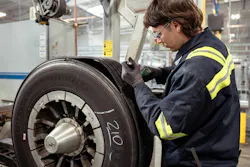
Rising operating costs. The continued influx of low-cost new medium truck tires. A still-shallow labor pool. These and other market forces compelled many of the largest retreaders in the U.S. to up their game during 2025. And that’s exactly what they did.
In this exclusive lead-in to MTD’s 2026 Top U.S. Retreaders List, executives from six prominent retreaders discuss how they overcame last year’s challenges and have positioned their businesses for continued success.
Jim Russell, executive vice president, Border Tire (El Paso, Texas): “2025, for Border Tire, was a consolidation year. We opened our new retread plant in Redlands, Calif. We had three plants and now we have one. We're trying to capitalize on the efficiencies you get in being in a larger, more productive facility with newer equipment. There’s a lot of pressure from the competition, like low-cost imports, and then obviously the pressures of just the rising cost of business. Some of the other challenges are volatility in the fleet market and the challenges they face. I think our large retread customers have not changed their strategy. I think the challenge comes more in the local market with low-cost imports. This causes more price-conscious fleets to maybe go back and forth between retreading and new tires and I think as long as those pressures are still there, it will continue to be a challenge. A lot of fleets are asking for more data. We have the ability to provide them with more of that data. They're starting to look at what casings are retreading at a higher rate. I think data is important and they just want more of it. Our goal is to capitalize on the investment we’ve made over the last few years and be able to take advantage of that to not only provide better retreads in a timely manner, but to be more competitive in the market, as well. I think there's still a challenge with perception … the retread shops of old that were dirty, dingy — all of that. When (customers) come through our facility, they see it’s truly a manufacturing process that is very efficient, controlled and produces a high-quality process.”
Jeff Lecklider, president, Gem City Tire (Dayton, Ohio): “Last year, we had a really strong retread business, in general. Demand for retreads remains very strong in our region. One thing we’ve been able to really push is a second-tier retread with Goodyear, (which is) more of a price point retread. Goodyear UniCirlce is our premium brand and then we have … an economy-level precure retread that we’ve had some success with to combat the imported new tire situation that we’re all dealing with. The way we’ve been able to have success, quite honestly, is (our ability) to show up and service the account. That’s really been the way we’ve been winning more business and it’s become more difficult to do that. The labor market is still extremely tight — not only in the plant. It takes more to retreading than just the guys on the plant floor. There’s a lot that has to happen to gather up those tires and get them to the plant — route drivers, people who mount and dismount tires and so forth. But demand is good. With the economy being such, people are watching their Ps and Qs on what they spend, which is good for the retread industry. A lot of our customers are really welcoming the data that we can provide — as far as the age of their casings whether they have been retreaded before or not, how many repairs it takes in the casings to get them back to first line quality, their scrap rate, how successful there tire program is — so we’ve been able to win a lot of new business by just being able to help the customer improve their tire management program. We see a very robust 2026. There’s a lot of opportunity for us.”
Noah Hickman, president, H&H Industries (Oak Hill, Ohio): “2025 was an unexpected year for us. Operating costs continued to rise — labor, insurance, equipment — it all increased and it forced myself, and I believe a lot of other retreaders, to tighten up. With that being said, it also created opportunities for companies like us, who focus on process control. It seems like every year continues to be a little bit more of an effort, but we’re being proactive about it because today that’s all you can do. And so instead of reacting to national account pricing or price wars, we focused on strategy and efficiency. It’s all about educating service providers and end users. When dealers and retreaders partner up, everybody wins. The service provider grows their market share, the fleet improves their cost-per-hour and the program becomes predictable instead of reactive. Transactional thinking is under pressure when it comes to retreads. Program-based thinking is gaining traction and that's what it’s all about. Retreading doesn't work well as just a transaction. It works best as a program. That’s where I believe it’s going. The market is probably more competitive than it ever has been, but with end users and service providers starting to think more about lifecycle-based programs, I feel our business will continue to increase and our partnerships will continue to strengthen. OTR retreading is really not a fallback option. Done correctly, it’s an engineered solution.”
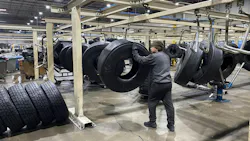
Jason Roanhouse, vice president of manufacturing, McCarthy Tire Service Co. Inc. (Wilkes-Barre, Pa.): “It feels like there’s a lot of uncertainty and, in some ways, that’s helped the retread industry and, in some ways, that’s created challenges for everyone — whether it’s economic uncertainty or volatility due to tariffs and how fleets are thinking about their business. Even so far as some of the more common casing sizes that have to be imported from other places, that impacts the price of casing on a global basis, versus just the domestic (market). A lot of low-profile 22.5-inch (tires) come in from different parts of the world. So a lot of this is hedging on the economic environment we find ourselves in. 2024 was probably the first year where I feel like we saw the market return to some kind of equilibrium. Of course, you had all the influences on things that have to move via truck — construction starts and interest rates. 2025 was a continuation of 2024 — continued stabilization, normalization — (and) fleets looking at what’s going to drive their equipment decisions. A lot of fleets that are making decisions on replacement of equipment are large fleets and retreading is a huge component of their tire program. Currently, there are no availability challenges or shortages for any inputs to the retread industry and I think fleets are continuing to want to get as much out of each casing as possible. We have seen some of our larger customers try to enhance and improve their retread programs to extend the life of their casings, looking hard at their specs and how they can continue to invest in maintenance to drive more value out of the casing. And that bodes well for the retread side of our business. We’re going to have to grow through competition. Our services are going to really matter. Being in the right place at the right time with our assets … that’s where we’re going to win and if we win there, we win on the retread front and on the new tire front.”
Mike Jacobson, vice president of manufacturing, Purcell Tire & Rubber Co. (Potosi, Mo.): “You have the truck tire retreading market and the OTR tire retreading market. Truck retreading during the first half of the year was soft and kind of a challenge for us and a challenge for our stores. The second half of the year turned out much differently. It felt like we were starting to get a little bit of a rebound. Most of our (truck tire) retreading is coming from our stores and now, with the purchase of Jack’s Tire & Oil, (we have) a lot of national account business and that helps, especially out west. (Editor’s note: Purcell Tire acquired Logan, Utah-based Jack’s Tire and Oil Management Co. Inc. in 2024.) In 2026, right now, so far, we’re up 6% ahead of last year's numbers. (In OTR tire retreading), the first half of the year was very tough. We have two plants — one in Potosi ,Mo., and one in Portland, Ore. — and both were struggling to try to stay busy. Our biggest competitor is off-brand (OTR) tires … tier-three and tier-four. Everybody is buying by price and they’re bringing tires into the market at sometimes below our cost. We’ve tried to stay away from buying tier-three and tier-four casings. But in the second half of the year, we picked up more casings and we’re selling more caps and casings. That’s driven a good part of our business. In the first three months of this year, we’ve capped a huge amount of OTR casings. We have to show the customer why they should be spending money on a quality casing and a quality new tire, so it can be retreaded and repaired. It really starts with that initial (tire) purchase.”
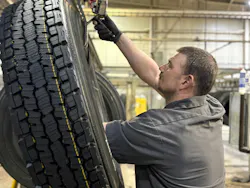
John Ziegler III, regional sales and operations manager, Ziegler Tire & Supply Co. (Massillon, Ohio): “2025 overall was a pretty successful year on the retread side. We certainly had growth in our plants. We had success with the lower- to mid-tier fleets. Our sales team has done a really nice job of keeping up and keeping production flowing into our plants. There were years not too long ago where it wasn’t uncommon for our plants to run four days a week. We were running five to six days a week most of last year, just to keep up with production. Staffing continues to be an issue. Turnover is still not where we want it to be. The amount of training that goes into getting something ready … it’s not something you learn in an hour. We continue to fight that battle. But (2025) was certainly a solid year. We’ve continued to expand our company. We opened two new locations last year, which is going to help production. We’re going to generate some additional retread business off of that. The casing market right now is plentiful. We’re hopeful that upward trajectory continues. I don’t think we’re looking at a 5% to 10% increase (during 2026), but if we increase another 2%, 3% or 4%, I think we’ll be successful. We’re optimistic about the year. We’re not treading water or looking at the negative side. We’re looking on the positive side.”
MTD's 2026 Top 50 U.S. Retreaders
About the Author
 Mike Manges
Mike Manges
Editor
Mike Manges is Modern Tire Dealer’s editor. A 29-year tire industry veteran, he is a three-time International Automotive Media Association Award winner, holds a Gold Award from the Association of Automotive Publication Editors and was named a finalist for the Jesse H. Neal Award, the Pulitzer Prize of business-to-business media, in 2024 and 2026. A past Endeavor Business Media Editor of the Year, Mike has traveled the world in pursuit of stories that will help independent tire dealers move their businesses forward. Before rejoining MTD in 2019, he held corporate communications positions at two Fortune 500 companies and served as MTD’s senior editor from 2000 to 2010.