Flat Market Reshapes Commercial Tire Dealer Business
What Tire Dealers Should Know
- Medium truck tire demand is largely flat, but fleets are buying closer to immediate need and shifting more business toward lower-priced products.
- Larger fleets continue to emphasize cost per mile, casing value and retreadability, while smaller fleets and owner-operators are more likely to prioritize the upfront purchase price.
- Rising fuel, labor, insurance and inventory costs are increasing pressure on dealer margins, making road service, fleet data, maintenance and adjacent commercial segments more important sources of value and growth.
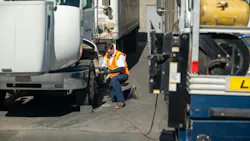
Medium truck tire demand hasn’t changed dramatically for most of the commercial tire dealers on MTD’s 2026 Top 25 Commercial Tire Dealers list, but the business around that demand has.
Dealers describe a market where overall volume ranges from flat to modestly higher, yet fleets are changing what they buy, when they buy it and what they expect from their tire suppliers. Lower-tier products are taking share. Retread demand is rising in many markets. Customers are holding less inventory and buying closer to immediate need. At the same time, sophisticated fleets are asking for more data, stronger service coverage and clearer proof that a tire will reduce their total operating cost.
Simultaneously, dealers are absorbing higher fuel, insurance, labor and inventory costs. The result is a commercial tire market where selling the tire is only one part of winning and keeping the business.
When MTD asked commercial truck tire manufacturers about the market earlier this year, they described soft or uneven demand, growing interest in tier-three and tier-four tires and greater attention to cost per mile, fuel efficiency, casing value and retreadability. The dealer side confirms those trends and shows how differently fleets are responding to the same cost pressure.
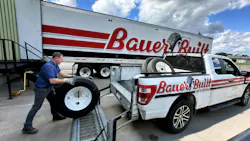
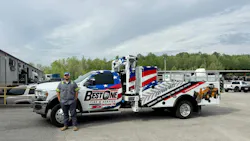
Black’s Tire Service Inc. and Bauer Built Tire & Service characterized their 2026 medium truck tire volume as flat. Rice Tire Co. said new tire business was flat to slightly down. Commercial Tire Inc. reported flat to slightly higher business, while Best-One Tire & Service said 2026 has been slightly better than 2025. Ziegler Tire & Supply Co. said sales and unit demand were up a few percentage points from a solid 2025.
Southern Tire Mart LLC, the No. 1 dealership on MTD’s Top 25 list, is the notable exception. Tom Fanning of Southern Tire Mart said the company was up by double digits even though the broader trucking and commercial tire markets remained difficult. He attributed the increase to gains across existing locations, new stores and acquisitions, along with continued expansion by Southern Tire Mart at Pilot Flying J travel centers.
Beneath a relatively flat top line, customers are increasingly splitting into two groups: those trying to optimize a tire throughout its lifecycle and those trying to minimize the upfront cost.
Fleets define value differently
Dan Horn, vice president of sales at McCarthy Tire Service Co. Inc., said the company’s larger fleet and national account customers have provided the greatest consistency. Those fleets generally continue to evaluate tire performance over time.
“The biggest change is the level of attention customers are placing on total operating cost,” said Horn. “Price has always mattered, but fleets today are looking much more closely at cost per mile, casing value, retreadability, fuel efficiency and overall tire performance.”
Smaller fleets and owner-operators, however, are more likely to move among price tiers as freight rates, fuel, insurance and other expenses strain cash flow, he said.
Mike Morast, vice president of commercial operations for Les Schwab Tire Centers Inc., sees the same divide. Sophisticated fleets are “looking beyond the acquisition price” at the total economics of a tire program, he said, but tier trade-down has still been significant. Les Schwab’s tier-three inventory footprint is larger than it was 12 to 24 months ago, requiring the dealership to forecast demand and account for the longer lead times associated with imported products.
At Rice Tire, the pressure on upfront price is reaching applications in which premium products traditionally had a stronger hold.
“A larger portion is looking for the cheapest option available, even on steer tires,” said Brian Chase, Rice Tire’s president.
Rice Tire has seen tier-one tires lose share to lower-cost imports. Eastern Iowa Tire Inc. President Gary Van Blaricom summarized the change in his market as customers “buying more imports.” John Ziegler III, regional sales and operations manager of Ziegler Tire, said smaller fleets are purchasing more tier-four products and do not appear to weigh cost per mile as heavily as they once did.
The change involves timing as well as product tier. Chris Watson, director of commercial sales for Commercial Tire, said large-volume and bulk purchases have declined as customers buy closer to their immediate needs and manage inventory more conservatively.
S&S Tire President Brooks Swentzel described the choice as one between the total cost at purchase and the long-term benefits of cost per mile and preventative maintenance. Fuel costs are pushing more customers toward the first calculation.
Southern Tire Mart sees the split largely along customer segments. Major fleets remain more likely to purchase premium products through national account programs, which give them product performance and pricing stability. Middle-market fleets and owner-operators are more frequently moving from tier-two to tier-three and, in some cases, directly to tier-four.
Retreading provides relief
The renewed focus on immediate savings and lifecycle cost is supporting retreading from both directions.
Rice Tire reported higher retread demand even as its new tire business softened. Black’s Tire said retreading is growing as customers seek more economical options. Ziegler Tire has recorded a significant increase in retread demand during the last six to nine months, while Best-One said its customers showed more interest in retreading during the second half of 2026.
Southern Tire Mart has also experienced a large increase. Fanning said retreading gives fleets performance comparable to a new tire in appropriate applications at a significantly lower acquisition cost, making it attractive to customers trying to preserve cash without abandoning lifecycle management.
However, the trend is not universal across the entire market. S&S Tire said its retreading business has declined this year even as its off-the-road and industrial tire and service businesses have remained strong.
The retread gains place more importance on casing management and product selection. Dealers must help customers determine when a lower-cost new tire, a premium retreadable casing or another retread cycle provides the best economic answer.
Dealer costs intensify margin pressure
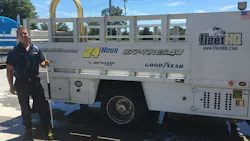
Fleets are not the only businesses dealing with higher expenses. Dealers must deliver enhanced service while their cost of operating continues to rise.
Rice Tire cited substantial increases in fuel, wages and insurance. S&S Tire also pointed to fuel and insurance, while Ziegler Tire said employee and fuel expenses continue to climb. Southern Tire Mart feels fuel volatility on an unusually large scale because the company operates over 2,200 mobile service vehicles. It has used fuel surcharges where possible and focused on more efficient dispatching, but emergency service still requires sending a truck when and where the customer needs it.
Black’s Tire managing owner Rick Benton said pricing has not fully reflected the cost of stocking, distributing and installing commercial tires.
“The commercial industry needs to find ways to build more pricing margins for the operating and installing dealers, as well as the high cost to distribute and stock truck tires,” he said.
Labor adds another constraint. Bauer Built, Ziegler Tire and Commercial Tire all identified recruiting and retaining qualified commercial tire technicians as a central challenge. Commercial Tire is responding with more aggressive recruiting, training and career development. S&S Tire is investing in training, development and employee incentives, while Southern Tire Mart continues to support leadership programs and technician certifications.
Inventory creates a different balancing act. Customers want immediate availability but are less willing to carry excess tires themselves. Dealers therefore must hold the right mix without tying up too much capital or being caught on the wrong side of price changes. Van Blaricom said low fill rates have forced Eastern Iowa Tire to alternate among manufacturers. Les Schwab has increased earthmover inventory in certain markets because just-in-time availability has been less reliable, while its medium truck tire supply has remained comparatively stable.
Uptime becomes the product

As tire margins tighten, dealers are placing more emphasis on availability, fleet management, road service, documentation and speed.
“Commercial fleets increasingly value uptime, and downtime can quickly become more expensive than the tire itself,” said McCarthy Tire’s Horn.
McCarthy Tire continues to invest in commercial tire service, emergency road service, fleet support, technology, equipment and employee development. Horn said those capabilities help customers keep equipment operating, extend tire life and lower total operating cost.
S&S Tire is following the same principle through roadside service, mechanical work and quick turnaround. Commercial Tire is using technology to improve fleet communication, monitor tire performance and make service operations more efficient.
Morast said data becomes valuable when a dealer can respond to it quickly. “Having that data and being able to act on those metrics immediately” helps fleets control costs, he said. For Les Schwab, that responsiveness is part of a broader focus on execution, inventory placement and problem solving.
Southern Tire Mart’s STM Connect platform provides fleets with a record of a service event, including photos, roll times and pricing. Its locations at Pilot travel centers address uptime from another direction. Drivers can combine fueling, showering, tire work and maintenance during one stop — an important consideration when hours-of-service requirements limit their available time.
These services turn dealer scale into an advantage only when the network executes consistently. A large footprint may help a dealership win a fleet account, but keeping that account depends on product availability, response time and the quality of each service event.
Growth beyond medium truck tires

Several of the largest commercial tire dealers are finding growth in adjacent businesses rather than waiting for a broad freight recovery.
Commercial Tire said construction-related business remains strong, creating opportunities in commercial truck, OTR and service segments. S&S Tire also reported strength in OTR and industrial tires and service.
Les Schwab is investing in construction, earthmover and mining capabilities. Morast said those segments require specialized equipment, service trucks, tooling, safety processes and trained technicians. Large data center projects and strong mining activity have helped create demand in markets where Les Schwab already has those capabilities.
Southern Tire Mart is expanding in passenger and light truck service, industrial and material handling tires, OTR work, construction and infrastructure. Fanning said the company increasingly follows large contractors to project sites and, in some cases, locates service operations on-site to reduce travel time and equipment downtime.
“When there’s only so much pie, you have to figure out a way to grow the plate,” he said.
Continued investments also showed up alongside movement within MTD’s Top 25 ranking. Bauer Built advanced two positions to No. 9 after acquiring two Jack’s Tire Sales & Service locations and investing in robotics for retread and wheel manufacturing. Ziegler Tire moved one position to No. 15 while reporting higher sales, unit demand and retread activity. S&S Tire entered the ranking at No. 22 after opening a location in Delbarton, W.Va., and expanding its Columbia, Tenn., location.
When will the market recover?
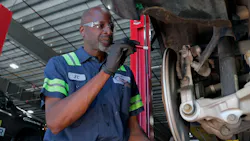
Commercial tire dealers didn’t agree on when the market will strengthen.
Rice Tire and Eastern Iowa Tire expect business to remain essentially flat. Commercial Tire does not anticipate a meaningful rebound in long-haul freight until the end of the first quarter of 2027, though Watson sees continued opportunity in construction-related work. Bauer Built and McCarthy Tire are cautiously optimistic. Ziegler Tire is more positive about the next 12 months.
Best-One President of Commercial Sales Pete Glesing said customers appeared more confident in the second half of 2026 as trucking capacity declined, but he declined to forecast the first quarter of 2027. Southern Tire Mart is also cautiously optimistic and will continue to watch consumer confidence, interest rates, international trade and the intermodal market.
Whatever the timing of a freight recovery, the competitive changes already underway are unlikely to reverse. Fleets have more tire choices, more financial pressure and greater access to performance information. Dealers have higher costs and must support a wider range of products, services and customer expectations.
The commercial tire dealers finding growth in this market are expanding the value they provide per customer through retreading, road service, data, maintenance, specialized applications and faster execution. In a market with little top-line movement, those capabilities are becoming a measure of momentum.
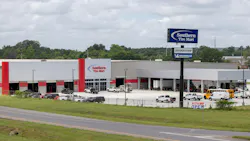
MTD's 2026 Top 25 Independent Commercial Tire Dealers in the U.S.
Download MTD's 2026 Top 25 Commercial Tire Dealers list
About the Author
 Sara Welch
Managing Editor
Sara Welch is Modern Tire Dealer's managing editor. She is an award-winning journalist who covered agriculture in Ohio, Pennsylvania and West Virginia for 10 years and sports for five years before coming to MTD. She can be reached at [email protected].