New Bridgestone Bandag Training Center Expands Tire Retreading Education
Key Highlights
- The Akron facility is Bridgestone’s second Bandag Training Center, joining its existing center in Muscatine, Iowa.
- Its full-scale retread operation includes equipment and stations covering all 10 steps, plus a classroom and Bandag history walk.
- Company leaders say skilled employees and dealer-fleet relationships are essential to retreading’s role in managing tire costs.

Bridgestone Americas Inc. recently opened a new Bandag Training Center at its Akron, Ohio, facility that will educate and train commercial tire dealers and fleets on the performance, sustainability and financial benefits of retreaded tires.
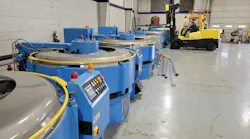
A $3 million investment, the center is located in the company’s tire test lab, next to the Bridgestone Americas Advanced Tire Production Center (ATPC). It encompasses a complete retread warehouse with “production-scale manufacturing equipment and stations for each of the 10 retreading steps, along with a classroom and the Bandag history walk,” say Bridgestone officials.
The Akron facility is the second Bandag Training Center established by Bridgestone, joining its complex in Muscatine, Iowa.
“Bandag retreads have been a staple solution in the commercial tire industry for more than half a century,” said Brian Douglas, vice president, retread North America. “With the addition of this second training center, Bridgestone aims to strengthen its support for dealers and fleets, matching the value they get from retreads on the road.”
Connections across retreading
The intention behind the new “state-of-the-art” operation is a direct response to the increasing need for closer collaboration between retread suppliers, commercial tire dealers, plant managers, operators and technicians to keep up on the latest trends and technological innovations.
The center provides a hands-on, full-scale model that includes equipment across the retreading process, including the phases of initial inspection, casing checks and sonography, buffing and repair, extruding, tread building and curing.
Bridgestone officials emphasized Bandag’s decades-long reputation of providing tire-retreading solutions and said the company has “diverted more than 300 million tires from landfills by extending their service lives through retreading.”
Leading with education
“Due to the volume of training requests, generational retirements and other factors, there is a higher need for retreading training in our industry,” said Rob Seibert, president, commercial truck group, Bridgestone Americas.
Many trainings conducted at both the Akron facility and Bridgestone’s Bandag Learning Center in Iowa include certifications for repair and retread technicians that the company awards to plant managers, retread technicians and franchise dealers, said Douglas.
Additionally, the new center doubles the company’s ability to introduce, conduct research and test retread product innovations across its Bandag equipment to keep advancing the retreading industry and invest in new tread developments.
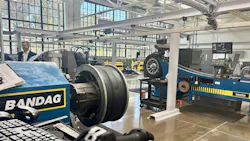
“Bandag is a very complicated process,” said Douglas. “You need to have the equipment, tread product and training team to put it all together, and we have all three of those components.”
A fluctuating commercial tire market
Demand for retreading has remained “relatively stable” over the past three years following the “great freight boom” the industry experienced during the COVID-19 pandemic, according to Seibert.
As MTD has recently reported, medium truck tire demand is generally flat, as larger fleets continue to value maximizing cost per mile, casing value and retreadability, while smaller fleets and owner-operators tend to emphasize upfront purchase price.
While the commercial truck tire market continues to fluctuate, a revamped opportunity exists for commercial tire dealers and operators to prioritize retreading as fleets continue navigating elevated fuel, labor, insurance and inventory costs.
“We obviously produce the tires, but where our commercial dealers differentiate themselves is on service,” said Seibert. “We manufacture tires, then they use retreading as a service to support their fleets beyond the initial tire sale, manage their tire program and support their cost per mile.”
While Bridgestone’s Akron center aims to leverage stronger training and development across commercial tire retreading operations, Seibert said the future of the U.S. retreading industry will depend on the relationships between dealers, retread shops and the expanding needs of commercial fleets.
“What brings all of this together is the employees that work in the retread shops that utilize the equipment and the salespeople that work with the fleets on managing their tire programs,” said Seibert.
“That’s where training comes at the center of that. In the end, the equipment is there, but it comes down to the people that operate it, work with the equipment and take care of their fleets.”
About the Author
 Aden Graves
Associate editor
Aden Graves is MTD's associate editor. A graduate of Kent State (Ohio) University's award-winning School of Media and Journalism, Graves holds a bachelor's degree in journalism and another bachelor's degree in communication studies.