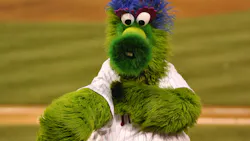
A mascot for a business plays an important role. It fills an immediate mental image of brand representation. Ronald McDonald. The Phillie Phanatic. Tony the Tiger. (Dare I say, The Marlboro Man?)
Those images also create a feeling — a bond, if you will, to the company’s product. (Who can “give a hoot and not pollute?”) Our own industry has a mascot that is arguably in the top five of all time: good old Bibendum, the Michelin Man. These connections bridge an emotional gap that a tire, refrigerator, hamburger or cereal cannot create on their own.
But Mickey Mouse does not run Disney. He doesn’t even run the amusement parks. He and Minnie don’t make executive decisions on cash flow or mission statements. The Marlboro Man doesn’t take a long drag of a cigarette (vape pen?) before disciplining an employee for being late for the fourth time this month — nor does he step in and put out fires when customers are complaining about the quality of Marlboro brand cigarettes.
Mascots do not have the power and authority to do the job of managing others or controlling business expenses. Managers, however, do.
We have a problem with our industry. It isn’t unique to us in any way. It’s a problem across most retail organizations. We tend to promote the most successful salespeople to the position of management and there are close to zero transferable skill sets — outside of basic communication — that transfer with that promotion.
Moving a top performer who has excelled in doing things on their own to a demanding position where the majority of success is determined by doing things through others is a jarring experience for both the business and the individual.
Most of the training isn’t in skills. It’s in procedures and tasks: checklists and paperwork and deadlines like ordering inventory and submitting payroll. (Your store’s manager does handle payroll tasks, right?)
Training is a terribly overused word for conditioning automated response. Pavlov trained his dog about dinnertime. We train employees not to break the law. You don’t train a manager on how to manage people. That’s called education.
There are lots of assessments and summaries on what the function of retail or frontline management entails. Generally, the core functions are the same: independent authority and power over:
-
Team leadership, which includes corrective and collective actions;
-
Sales and after-the-sale customer service (complaints);
-
Inventory management, including working with vendors;
-
Operational management, including safety, compliance and standards enforcement, and;
-
Financial management.
You can add to this list, but you can’t subtract from it. You can co-share responsibilities, like firing and discipline procedures, but you shouldn’t. You’ll eventually create a no power/no authority environment. You’ll shoot down all the tough decisions because you don’t have to deal with the consequences.
Your team will realize they are being run by a figurehead — not a leader — and will circumvent this blockade. It’s natural to do so. Why talk to a gatekeeper with no real authority who just parrots the rules when you can talk to the key master? You’ll create two popes and your team will counter with the tactic of divide and conquer. That doesn’t mean you have a bad team. It means you have a bad structure.
Mascots are figureheads — ornaments on the tree, where the balls and lights are for decoration only. If you get into an argument with Mickey Mouse over the wait time at Space Mountain, it’s going to end badly. There is no positive outcome. Remember, mascots are for visuals and feelings. They create those things well — both good feelings and bad feelings.
If all you are comfortable with as an owner is having a sales manager — someone in charge of sales, after-the-sale, cash register audits and staffing at the counter — that’s fine. But drop the facade of this person being in control of your store. They are not.
Stop hiding behind a “leader” who is tasked with taking arrows in the chest aimed at you, yet has no authority or control over financials if they don’t know what payroll is or why it needs to be managed down when sales or productivity drops below a threshold. If they don’t know how to calculate net profit, how can you hold someone accountable to that number? Sales managers should be judged and rewarded on sales and gross profit — not net.
This isn’t to say your store manager gets free rein over operations. They have to follow your rules and your guardrails. Let them, if you trust them. If you don’t, educate them. If they can’t be trusted to make good store manager decisions, put them back in the role they thrived in. Let them be happy at work.
About the Author
 Dennis McCarron
Dennis McCarron
Dennis McCarron is a partner at Cardinal Brokers Inc., one of the leading brokers in the tire and automotive industry (www.cardinalbrokers.com.) To contact McCarron, email him at [email protected].