Van Batenburg: The Truth About Electric Cars
I have been reporting on the myths about electric vehicles (EVs) for quite some time. This column is about how far EVs have come. It may surprise you.
The average U.S. electricity rate is 18.05 cents/kilowatt-hour (kWh) for residential and 14.12 cents/kWh for your tire store, as of May 2026. Gasoline at that same time averaged $4.50 per gallon for regular gasoline, with higher octane and diesel significantly more. How long will that last? No one knows. (What if wholesale tire prices were in the same boat?)
To make a comparison between gas and electric, in 1999, the federal government created MPGe or miles-per-gallon gasoline equivalent. Miles per gallon is easy to understand. What about MPGe? (You can use miles-per-watt if you like math.) Great fuel economy for an EV is five miles per 1,000 watts (1Kw).
A barrel of oil, trading on Wall Street, is volatile. Electric rates are regulated by the state you live in — no big spikes. You can make your own fuel, “if you let the sunshine in” — a reference to an old hippie song from years ago.
Automotive Career Development Center (ACDC), my xEV training company, reopened our repair shop called Worcester EVs in January of this year. Twenty-two years ago, I closed Van Batenburg’s Garage Inc. after 25 years as an independent Honda specialist. That is when we changed our focus to hybrid technician training, adding PHEVs and EVs when they went on sale here.
I am back dealing with customers, including their tires and car problems. (More about that in future installments of this column.) As I am an outgoing and friendly type, we also rejoined the local Chamber of Commerce and have attended many evening gatherings. My opening line with the people I meet there is, “Do you make enough money to drive an electric car?” Most people have an answer and are friendly. Some push back with a negative response. I don’t try to educate the anti-EV crowd, as I am there looking for new customers. It is working and I am learning.
An average of about 10% of the people I meet at these chamber events drive an electric car. The open-minded, curious ones ask these types of questions:
“Are the batteries expensive?” My answer is, “Only if you need one.” No one buying a gasoline car asks, “Is the engine expensive?” They expect the engine to last until they trade in their car for a new one, an interval of about six years, on average. High-voltage packs last about 200,000 miles, with 80% of their range left. The Nissan Leaf gave EVs a bad name as its battery pack was poorly designed. In model year 2026, they fixed that Nissan EV.
“I am afraid I will run out of power and be stranded.” It’s possible once, then you will learn not to. Some people still run out of gas and when they do, AAA brings them some gasoline. That experience usually teaches you to top off more often. The same applies to EV owners. The majority of EV owners have a place to charge at home. In large cities, they may be able to charge at work. Either way, they top off the battery every day. In 2026, most EVs will have 300 miles of range. Eighty percent of American drivers could use an EV with no change in their lifestyle.
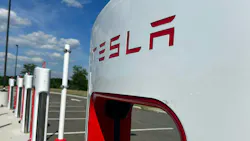
“What about long road trips?” If you’ve bought a Tesla since 2012 or almost any new 2026 EV, the charging system for long trips, called DC fast charging, is built and maintained by Tesla. If you are considering an EV, ask if the car comes with “NACS” charging. NACS stands for North American Charging Standard. If that is a yes, long trips are easy.
“What does a new EV cost?” New EVs retail from $30,000 to $50,000 for a 300-mile, front, rear or all-wheel-drive sedan or SUV. You can always spend more. What is the cost of a used General Motors plug-in hybrid (PHEV), hybrid (HEV) and electric vehicle (EV) versus a gasoline car? With gasoline and diesel prices as high as ever, many Americans are looking at used electric cars to reduce their fuel costs.
The price of used EVs is rising while gas guzzlers are dropping, according to cars.com. We have seen this movie before and we know the ending. If you just bought a V8 truck, you are telling yourself that these high gasoline prices won't last. In June 2008, the price was $4, but it lasted only a few months. Will that be the case again? We will see.
A mid-sized EV gets over 100MPGe. The 2020 Chevrolet Malibu with the standard 1.5L turbocharged engine delivers an Environmental Protection Agency-estimated 32 miles per gallon. The Bolt EV’s MPGe is 115, average city or highway. If you keep doing the math, even if gasoline drops back to $3 dollars a gallon, the fuel costs are not in the same ballpark. Give EVs — and EV service — a think.
About the Author
 Craig Van Batenburg
Craig Van Batenburg
Craig Van Batenburg is a monthly columnist for Modern Tire Dealer. Craig owns two companies. The Automotive Career Development Center (ACDC) provides international training related to electric and hybrid vehicles. He also operates www.WORCESTEREVS.com, an EV repair shop. For more information, see www.FIXHYBRID.com or email Craig at [email protected].