Van Batenburg: How to Make 'Human Capital' More Human
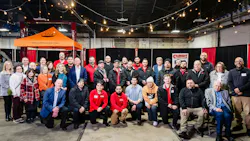
When I sat down to draft this article, it was after a very busy week at our new EV repair shop, www.WorcesterEVS.com — or WEVS. The week was also five days straight of hybrid technician training at my other company, Automotive Career Development Center (ACDC).
These two companies are in the same building, separated with two entrances and a dividing wall. Owning two businesses can be exhausting, even with a team of professionals and outside consultants.
After a few years of writing about the effects of electric cars on your tire and repair shop, plus opening WEVS at the beginning of 2026, I believe my experience of creating my second repair shop will be valuable to you.
In this new monthly column, we will suggest what we think works and what does not in the operation of a tire and service center in 2026. From small to multi-location facilities, keep an open mind. These ideas are not just mine, but are also from shop owners I meet on a regular basis at ACDC.
My perspective is the long view. At 26 years old in 1977, I had $1,200, a toolbox, a VW bus, two motorcycles and a dream. I knew a dream without a plan is just a dream. It has been an amazing journey.
In this column, we will discuss the “dreams” we had before we became business owners. Even if you failed at your own shop and now manage someone else’s tire store, this new series of articles may be helpful.
Your first dream? Paying the bills. If you are a start-up or remember when you were, this trip down memory lane may sound familiar. You may have heard this before: “If you offer great service but fail to make a profit, you will soon run out of money. If you offer poor service, you will soon run out of customers.” The trick is to do an excellent job and make a profit. Any long-term automotive tire and repair shop knows how to do that, but it is not easy. These are great companies that can help you make a profit.
Except the building you occupy — assuming you own it — nothing else goes up in value. The lifts, tire machine, alignment rack, etc. decline in value over time. There is, however, one more aspect of your store that becomes more valuable as time goes on. That would be the people that work there, including you.
Training people is essential to the growth of any business. Training can be formal, like getting a degree in business or automotive science and technology with some financial help from your company. Many shops offer “on the job” training, with a senior tech mentoring a high school graduate. There are many ways to increase job proficiency if they are willing. Most employees from the shop to the office want to know that a career path of advancement is possible and what is required to get there. This is something many franchises offer and small shops may not.
If you research the words “human capital,” the name of my new column, it may seem cold and calculating. It can be from a purely financial aspect. Here is some information I found via Google:
-
The talent gap. The retirement of older generations coupled with a lag in younger workers entering the tire and auto service trade has created a severe shortage. Local resources in my area, like MassHire Worcester Career Center, address workforce lifecycle shifts, but dealerships often struggle to retain expertise.
-
AI and diagnostics. Despite the rise of artificial intelligence, technicians are irreplaceable. Platforms like ACDC highlight that hands-on diagnostics, physical repair and safety recalls require human intellect.
-
Retention economics. According to Netchex, shops are moving away from antiquated flat-rate pay models that penalize quality for speed. They now invest in competitive wages, upskilling and daily payout apps to improve technician retention.
How much data do you use to make decisions? Has every part of your business been boiled down to a number? When you are ordering tires in the spring for the winter season, numbers are king, right? What about the weather where you live? Has it changed over the decades? Do the numbers reflect that?
I assume that your dealership wants to stay up to date with the latest equipment so that advanced driver assistance systems (ADAS) can be managed without sending that work out. There are other ways to oversee ADAS, such as having a mobile ADAS technician come to your store. But that is a short-term fix. If your staff learns how to take care of ADAS service in-house, they are more valuable. Their self-worth is elevated and they can provide on-the-job training for the less-experienced members of your team.
In that way, human capital becomes more human. Culture changes and the work environment relaxes into a sense of caring for each other. People are not numbers and never were.
About the Author
 Craig Van Batenburg
Craig Van Batenburg
Craig Van Batenburg is a monthly columnist for Modern Tire Dealer. Craig owns two companies. The Automotive Career Development Center (ACDC) provides international training related to electric and hybrid vehicles. He also operates www.WORCESTEREVS.com, an EV repair shop. For more information, see www.FIXHYBRID.com or email Craig at [email protected].