Consistency is Key to the Boyajian Brothers' Growth
Key Highlights
- The Boyajian brothers entered the tire industry almost by chance, eventually building a multi-store dealership.
- Implementing a middle management role allowed them to focus on strategic initiatives like vendor negotiations and business development.
- Standardizing store operations and processes has been key to maintaining consistency across multiple locations, ensuring seamless customer and employee experiences..
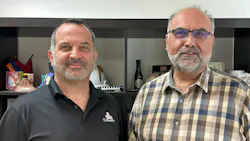
Stepan Boyajian is the co-owner of seven thriving retail tire stores, along with his brother, Harry Boyajian — a vocation Stepan says neither could have envisioned in 1983, when they emigrated from war-torn Lebanon to the United States with their parents and younger brother.
“We fell into the tire industry almost by accident,” says Stepan, after he and Harry, who are of Armenian descent, graduated from college in the 1990s.
Stepan and Harry have come a long way since then. Today, the brothers have six stores in California, including one in Thousand Oaks that opened in December 2025 and an outlet in Bullhead City, Ariz. Their dealership, which is part of the Tire Pros network, is enjoying another prosperous year.
From the outside
“I was not a car guy,” Stepan admits. “I had a degree in economics and I wasn’t sure if I was going to do real estate or work in finance,” after graduating from California State University, Los Angeles, in 1996.
“I was working in a temporary position at a bank. We knew there was a sunset to that job.”
Stepan’s then-girlfriend and now-wife, Vana, encouraged him to talk with her father, Andy Kasbarian, who had earned a degree in electrical engineering and later opened a tire dealership. “She said, ‘My dad has a tire store. It’s not like he’s a mechanic.’”
Stepan liked what he heard and soon stepped into the world of tire retail. “I fell in love with the idea of taking care of customers,” he says. “But I was clueless about what it took to run a business.”
Under Kasbarian’s mentorship, Stepan learned as much as he could and found that he enjoyed his new profession.
“My brother, Harry, who had a degree in computer information systems,” joined the dealership in 1999.
Within a few years, the brothers decided to venture out on their own. They opened a store in Glendora, Calif., in 2002. “In September 2003, we opened our second store,” says Stepan. “When we had two stores, we thought, ‘Two brothers? Two stores? Great!’”
A third store followed. But it came with some unexpected challenges. “We had the mentality of shopkeepers,” says Stepan. “Everything came through us.”
The result? “We eventually ran into a wall,” Stepan recalls. The brothers even considered walking away from the tire industry.
“We reached out to the Tire Pros folks and said, ‘I don’t know if we’re going to be able to stay afloat,’” says Stepan. “They came in and said, ‘Breathe. Count to 10. There are support mechanisms out there, like 20-groups.”
Stepan and Harry took Tire Pros’ advice and recalibrated. (The brothers are longtime members of Randy O’Connor’s D2D Development Group. They also are members of the Independent Tire Dealers Group LLC.)
With renewed enthusiasm, Stepan and Harry began adding stores again. As their footprint grew, they found themselves bouncing from location to location, including their Arizona store, which is hundreds of miles from their other outlets.
As growth continued, they came to another realization: their management system was unsustainable.
After years of “running around and juggling duties,” they concluded that “we were too big to be a small company and too small to be a big company,” says Stepan.
They then created “a middle management position,” operations manager — a big step for the two owners who pride themselves on running a lean, ultra-efficient business. Stepan and Harry promoted one of their store managers, Hugo Sanchez, into the new role
Sanchez now oversees all seven of the Boyajians’ stores. “He’s in the trenches with them and works to make sure our expectations — store deliverables and all that — are aligned,” says Stepan.
This has freed Stepan and Harry to work on broader initiatives, including exploring “buying opportunities, negotiating with vendors and bringing in new programs,” says Stepan. “Sometimes you grow and you forget certain elements of your business and all of a sudden, you realize certain projects are collecting dust.”
Stepan and Harry have also focused on inward-facing enterprises. Over the last few years, they've made a concerted effort to “systemize” their stores with the goal of ensuring a consistent experience, regardless of location — not just for customers but for their employees, as well.
“Three (store) purchases ago, we said, ‘OK, we don’t want to rock the boat too much’" in terms of changing point-of-sale systems and other in-store functions when acquiring a new location.
“Well, we didn’t rock it enough,” says Stepan.
The brothers’ stores now run on the same point-of-sale system and other standardized processes.
“Otherwise, it’s impossible. You can’t have seven different ways of doing things at seven different stores. We’ve always said, ‘If we parachute a manager or a service advisor into another store, there should be no questions about how this is done or how that is done.’ It should be so seamless that the only difference between their store and the new store is the physical layout of the place.”
‘Three pillars’
Maintaining a balance between employee, customer and vendor relations is another priority, according to Stepan.
“We learned from very early on that the minimum number of legs a stool needs for stability is three. You cannot have a two-legged stool. You cannot have a one-legged stool.
“People say, ‘The customer is number one. That’s all that matters.’ Well, let’s split hairs a little bit. What good is it if my employees are the greatest and my customers are taken care of, but I’m not paying the bills or bringing the best programs from my vendors to my employees? What good is it if I’m taking care of my vendors and taking care of my employees, but treating customers inappropriately?
“The three pillars of our success are being fair, correct and true to our customers, our employees and our vendors,” says Stepan. “If these three components are on stable ground, the rest will take care of itself.”
As Harry and Stepan position their dealership for future growth, Stepan says they will remain focused on not just the nuts and bolts of efficient operations but also what he calls “intangibles. There are many things that contribute to the customer choosing your place. Among those are price, brands and your menu of services. But at the end of the day, people are still dealing with people and appreciate what the other person provides for them.”
About the Author
 Mike Manges
Mike Manges
Editor
Mike Manges is Modern Tire Dealer’s editor. A 29-year tire industry veteran, he is a three-time International Automotive Media Association Award winner, holds a Gold Award from the Association of Automotive Publication Editors and was named a finalist for the Jesse H. Neal Award, the Pulitzer Prize of business-to-business media, in 2024 and 2026. A past Endeavor Business Media Editor of the Year, Mike has traveled the world in pursuit of stories that will help independent tire dealers move their businesses forward. Before rejoining MTD in 2019, he held corporate communications positions at two Fortune 500 companies and served as MTD’s senior editor from 2000 to 2010.