How to Lock Down the Off-Road Light Truck Tire Sale
Key Highlights
- Growing interest in off-road vehicle modifications creates opportunities for tire dealers to sell complete tire, wheel and suspension packages.
- Dealers can increase sales by matching off-road fitments to customers' driving habits, vehicle use and performance expectations.
- Product knowledge, inventory availability and skilled technicians are essential to building customer confidence and capturing off-road business.
- Successful off-road builds can generate repeat business and referrals as customers share their finished vehicles with others.
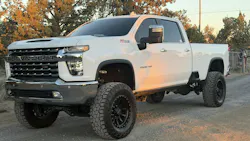
As more pickup, SUV and CUV owners personalize their vehicles for recreation, tire dealers can capture more business by matching tires, wheels and suspension packages to how customers actually drive.
Off-road demand is no longer limited to hardcore rock crawlers, trail regulars or weekend adventure rigs. More pickup, SUV and even CUV owners are modifying vehicles that still spend most of their time on-road, but need to look and perform differently when pavement ends.
Some customers want more clearance for gravel roads. Others want a stronger stance, more aggressive tires, towing capability, trail confidence or a complete wheel, tire and suspension package that fits the lifestyle they are building around their vehicle.
For tire dealers, that shift creates opportunity. But capturing it requires more than selling a larger or more aggressive tire.
Are you ready to sell the fitment?
Off-road demand
According to the 2026 Specialty Equipment Market Association (SEMA) Market Report, U.S. consumers spent just under $53 billion on vehicle accessories and modifications in 2025. The report says pickups accounted for about 30% of the overall specialty-equipment market, while CUVs accounted for 15% of accessory purchases.
There's clear market opportunity in selling light truck tires, including tires for off-road applications, and as more consumers modify pickups, SUVs and CUVs for recreation, tire dealers should be prepared to sell the complete fitment — not just the tire.
Jason Sparks, manager of Central Tire in Bend, Ore., says the first step for dealers is understanding what “off-road” means in their own market.
“I think a lot of it for us is understanding your market and what people want and where they’re going,” says Sparks. “Are you in an area like Moab, where it’s a pretty intense season or like our season here, where we have a lot of high lakes and we have a lot of hiking?”
In Central Tire’s market, many customers are preparing for gravel roads, trailheads, lakes, camping trips and outdoor recreation.
“For us, it’s just a good, heavy all-terrain tire (that's) just ready for any kind of terrain.”
Defining off-road applications
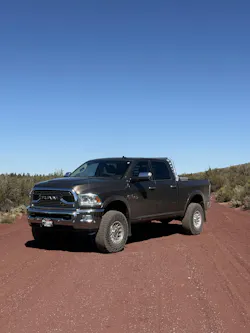
Off-road means different things to different customers and that distinction is important because the off-road customer is not one type of buyer.
Some customers walk into a dealership with a specific build list. They have researched tire sizes, wheel offsets, lift kits, shock packages and online reviews before they ever talk to a salesperson.
Others simply know they want their truck or SUV to look more capable, drive confidently to a trailhead or handle weekend recreation without sacrificing daily drivability. Sparks says dealers need to be able to sell to both.
“You have so many different levels of customers that walk through the door,” he says. “From the enthusiast that has done all the research and knows exactly what they want … to the person that is the weekend hiker and takes their dogs out to the lake that has no idea what they want, but they mostly know what they want it to look like.”
That makes the sales conversation more visual and consultative than a standard replacement tire sale. Sparks often starts by asking customers what they want the finished vehicle to look like. Customers may show him photos or examples of other builds. From there, he works backward into the right wheel, tire and suspension package.
“Show me what you want," he says. “Show me what your expectation is at the end of this."
Then Sparks asks how the customer actually plans to use the vehicle.
“'What kind of experience do you want from this drive? Are we going for some serious off-road driving with some articulation or are we just driving down the highway to the nearest trailhead so that we can hop out and go for a hike?'"
That is where dealers can create value, according to Sparks. A customer who wants a serious off-road build may need a different tire, wheel and suspension setup than a customer who wants a better-looking daily driver with occasional trail capability.
The sales opportunity is not just matching size to vehicle. It is matching the entire package to how the customer drives.
Stock for your market
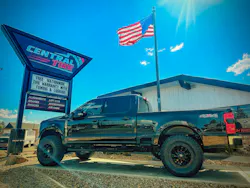
Dealers do not have to serve an extreme off-road market to participate in the off-road opportunity, but they do need to understand which products fit their customers’ most common applications.
For Sparks, that means paying attention to what is already selling, what vehicles are showing up in the market and how customers are using those vehicles.
“What is most commonly sold to me is kind of a good, heavy all-terrain tire,” he says. “But again, I think that’s understanding your market, understanding what people are going to want and need and understanding the trends a little bit, too.”
He recommends paying attention to what customers are already driving and what types of builds are common in their area.
“What are people buying out there?” Sparks says. “Noticing what you see, like you’re walking through the grocery store parking lot and you’re looking at some of these cars or trucks that they’re taking off-road.”
Availability still matters, especially when customers are preparing for seasonal travel, recreation or upcoming trips.
“Make sure you have it, because if you can’t get it, you can’t sell it," he says.
That inventory strategy does not mean every dealer should stock for rock-crawling builds or the most aggressive mud-terrain fitments, he notes. It means dealers should know which tire types, sizes, wheel packages and suspension upgrades are most relevant in their region.
A dealer near a destination such as Moab may need a different mix than a dealer serving customers who mostly drive forest roads, job sites, gravel roads, lakeside trails or campgrounds.
Fitment conversation
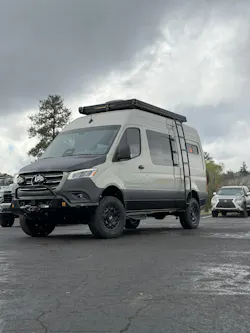
The heart of the off-road sale is the fitment conversation. Customers may start with tire size, tread design or the look of a wheel, but dealers need to explain how those choices affect the vehicle as a whole, including wheel offset, clearance, rubbing, lift height, suspension geometry, road noise, ride quality, towing, hauling, braking, fuel economy and alignment.
Sparks says social media and online forums can make those conversations more complicated because customers often arrive with advice from people who use their vehicles in very different ways.
“They could be on a forum talking to a bunch of Jeep enthusiasts who just spent a week in Moab doing some crazy stuff or they could be talking to a group of people that just take their dogs for a walk on a trail. And the expectation of those is two totally different things.”
Dealers have to translate that information into a build the customer can actually live with, he explains.
Some suspension kits ride better than others. Some perform better off-road. Some lift and wheel combinations may deliver the appearance a customer wants, but create compromises in daily drivability. More aggressive tread patterns may improve traction in certain conditions, but add noise on the highway.
“Helping people understand the actual equipment that they’re buying, what the purpose of the equipment is and then helping them understand what that feel is going to be" is essential, Sparks says.
That consultative approach is also how dealers move the conversation away from price alone.
In MTD’s recent light truck tire market reporting in August, manufacturers described a more specialized LT tire market, with all-terrain, rugged-terrain, mud-terrain and other products designed around increasingly specific combinations of appearance, capability, comfort, towing, load capacity, weather performance and vehicle use. The takeaway for dealers is that application matters more than category alone.
For off-road fitments, that means asking better questions before recommending a tire or package. Dealers should know whether the customer is mostly commuting, towing, hauling, driving gravel roads, camping, overlanding, rock crawling or simply trying to improve the look of their vehicle.
The right answer may be an all-terrain tire, a rugged-terrain tire, a mud-terrain tire, a different wheel package, a leveling kit, a lift kit or a recommendation to avoid going too aggressive for the customer’s actual use case.
SEMA’s data supports that broader view of the market. Among accessorized vehicles, pickups and SUVs have the highest off-road usage, at 26% and 21%, respectively. But many of those same vehicles are also used for errands, commuting, pleasure driving and work. Many off-road customers still need their vehicles to function as daily drivers.
Protecting the sale
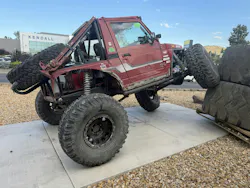
While inventory and product knowledge help dealers win the sale, Sparks says the most important upfront investment is the technician who will install the product.
“I would focus on the tech installing the product,” he says. “You need to have an installer that you have faith in. You need to have an installer that knows what he’s doing. Without that installer — without that person that can do the job — getting it done is a whole different game.”
That is especially true when dealers move beyond tires and wheels into suspension work. Sparks says salespeople should understand the products they are selling and ideally, have some exposure to the installation process.
“If you sell somebody some long-arm travel kit or a coil-over suspension kit or you’re going to delete torsion bars, that person at least needs to know what a torsion bar is,” he says. “They need to understand how it works.”
At Central Tire, Sparks says every salesperson has been involved with vehicle builds. That hands-on knowledge helps the front counter explain what is being sold and gives customers confidence that the shop can deliver.
This approach also helps protect the dealership. Off-road and suspension work can raise the stakes because the vehicle may be used in remote areas. A failure on a trail is different from an ordinary comeback, according to Sparks.
“He might be 100 miles out in the middle of nowhere and the last thing you want is for your installation to fail,” Sparks says.
Correct installation, torque procedures, alignment and quality control are critical. These factors also impact how confidently the sales team presents the work.
“If you have the faith in your technician to install this product properly, then you have the faith to be able to sell it. And it all comes out in your demeanor when you’re talking to a customer.”
For dealers considering whether to grow in the off-road segment, that is a key point. The category can create higher-value tickets and stronger customer engagement, but the shop has to be able to execute.
Expertise equals confidence
Off-road fitments can be more complex than a standard replacement tire sale, but Sparks says the upside is significant when the job is done correctly.
He says customers are emotionally invested in the finished product. They want to see the stance, the tire, the wheel and the completed build. They also tend to share the result with friends.
“How fun is it when a guy walks in and he wants to do all the stuff to his truck? This is the stuff that really kind of gets you excited.”
When the job meets the customer’s expectations, the finished vehicle becomes a rolling example of the shop’s work.
“The customer shows up, he’s so excited and he’s happy. He shares that with all his friends,” says Sparks. “Next thing you know, the phone rings: ‘My buddy was just down there and got this done and I kind of liked it. How much is this?’”
That enthusiasm is part of what makes off-road different from a standard replacement tire sale. The customer is not just buying tread depth or mileage. They are buying a vehicle that looks, feels and performs the way they imagined. For dealers, that is where the opportunity sits.
About the Author
 Sara Welch
Managing Editor
Sara Welch is Modern Tire Dealer's managing editor. She is an award-winning journalist who covered agriculture in Ohio, Pennsylvania and West Virginia for 10 years and sports for five years before coming to MTD. She can be reached at [email protected].